Auckland · 2026 Edition
Auckland Home Extension Guide 2026: Costs, Process & What Actually Works

Auckland home extensions in 2026 cost $4,500 – $7,500 per square metre built, with the total project running anywhere from $55,000 for a single-room add to $1M+ for a full second-storey on a larger home. The cheapest extensions are simple ground-floor rear additions on a level section. The most expensive are second-storey extensions on a sloping site with significant structural reinforcement needed.
This guide walks through everything Auckland homeowners need to know — extension types, real costs, consent requirements, the process from kick-off to handover, and the six pitfalls that blow extension budgets. Built from 500+ Auckland renovations and the design-and-build experience that makes us NZ’s 2025 House of the Year Gold winner.
Auckland extension costs in 2026
| Extension type | Typical 2026 cost | Per m² | Typical scope |
|---|---|---|---|
| Single-room add (20m²) | $55K – $90K | $2,750 – $4,500 | One bedroom or bathroom add. Ground floor, simple connection to existing. |
| Ground-floor extension (60m²) | $130K – $280K | $2,200 – $4,700 | Open-plan living + kitchen + outdoor flow. Most common Auckland extension. |
| Master suite extension | $180K – $350K | $3,500 – $5,500 | Master bedroom + ensuite + walk-in. Either ground floor or upper level. |
| Second-storey extension (70m²) | $220K – $450K | $3,100 – $6,400 | Full or partial upper level. Structural reinforcement, removed roof, longer build. |
| Full second-storey + reno combo | $450K – $1M+ | $5,500 – $7,500 | Major project — typically combined with downstairs renovation and reclad. |
Costs sit at the upper end of these ranges for projects in premium suburbs (Remuera, Devonport, Ponsonby), heritage-overlay homes, sloping sites, or homes needing significant foundation reinforcement.
Should you extend or move?
Most Auckland families do the maths and find extending wins. Here’s the framework:
| Extend wins when… | Move wins when… |
|---|---|
| You love the neighbourhood, school zone, or community | You hate the section, street, or aspect |
| The home has good bones and the right orientation | The structure is fundamentally compromised (leaky-home era, severe rot, asbestos throughout) |
| Comparable homes 200m away sell for $400K+ more than what extension would cost | The market value of your suburb is too low to justify the spend |
| You want to age in place | You’re downsizing or relocating regions |
| You’d lose $80K–$150K in agent fees, stamp duty, and moving costs to relocate | The new home delivers something the existing site never will (view, section size, single-level) |
The financial case for extending is almost always stronger in Auckland’s school-zone suburbs — Grammar Zone, Epsom, Mt Eden, Remuera. Moving costs alone (agent fees, legal, removalists) typically come to 4–5% of property value, which on a $1.8M Auckland home is $80K+ before you’ve added a single square metre of space.
5 extension types for Auckland homes
1. Ground-floor rear extension
The most common Auckland extension. Push out the back to create open-plan kitchen + living + dining, usually with bifolds or stackers onto a new deck. Works on almost any Auckland home with section behind it. Preserves the character frontage of villas and bungalows while delivering modern living at the rear.
2. Ground-floor side extension
Builds out along the boundary on wider sections. Often used for adding bathrooms, bedrooms, or a study without disturbing the main living areas during construction. Check height-to-boundary rules early — they bite on most Auckland sites.
3. Master suite extension
Either ground floor (for ageing-in-place or larger families) or above the garage. Includes bedroom, ensuite, walk-in wardrobe — sometimes a private outdoor area. One of the highest-ROI extension types in Auckland.
4. Second-storey extension
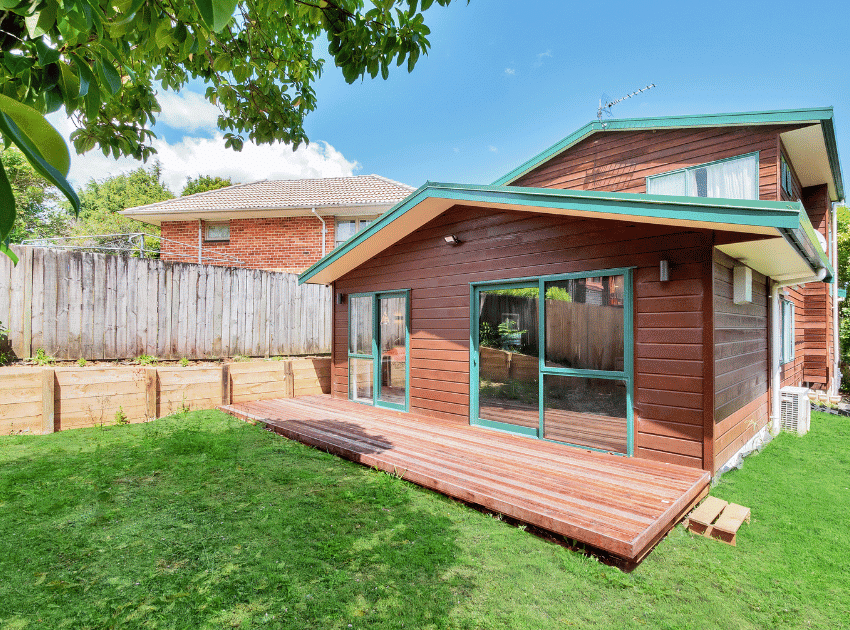
Goes up when you can’t go out. Works for small Auckland sections, properties on tight boundaries, or homes already at site-coverage limits. Costs 20–40% more per m² than ground-floor extensions because of structural reinforcement, temporary roof removal, and the need to live elsewhere during the disruptive phase. But it preserves your outdoor space and often captures harbour or city views.
5. Granny flat / minor dwelling
NZ’s 70m² consent exemption (in force 15 January 2026 under the Building & Construction (Small Stand-alone Dwellings) Amendment Act 2025) makes detached secondary dwellings far simpler than before. Useful for rental income, family separation, home office, or future ageing-in-place. Works on sections with enough room to maintain outdoor living space for the main dwelling.
The extension process — kick-off to handover
A typical Auckland extension takes 6–12 months from first conversation to Code Compliance Certificate. Three phases:
APlanning & design (10–18 weeks)
- Define the brief — what spaces, what flow, what budget, what timeline. Must-haves vs. nice-to-haves.
- Feasibility — site coverage, height-to-boundary, special character or heritage overlays, soil and foundation conditions. Get this right BEFORE paying for full design.
- Concept design — architect or design-and-build sketches options. Pick the layout.
- Detailed design + engineering — full drawings, structural specs, materials schedule. The document that goes to consent and to the builder for pricing.
BConsent processing (6–16 weeks)
Building consent for an extension takes 20–40 working days in Auckland Council once a complete application is lodged. Resource consent (if needed) adds 20–60 working days. Most extensions need building consent only; resource consent applies if you breach a planning rule like site coverage, height-in-relation-to-boundary, or you’re in a Special Character overlay.
CConstruction (12–28 weeks)
- Site setup, demolition, foundation
- Framing, roof, weatherproofing — the home is “closed in”
- Services rough-in (electrical, plumbing, HVAC)
- Insulation, lining (GIB), interior fit-out
- Exterior cladding, painting, landscaping
- Final inspections and CCC
When you need consent
| Scenario | Building consent | Resource consent |
|---|---|---|
| Adding new floor area (almost any extension) | Yes | Sometimes (if planning rules breached) |
| Second-storey addition | Yes | Often — height-in-relation-to-boundary |
| Building in a Special Character overlay (Ponsonby, Mt Eden, Devonport) | Yes | Yes — almost always |
| Detached granny flat under 70m² (post-15 Jan 2026 exemption) | No (exempt) | Possibly — depends on zone |
| Garage conversion to living space | Yes | Rare |
| Decks under 1.5m off ground | No (Schedule 1) | No |
Auckland Council fees on extension consents typically run $3,000 – $8,000 for building consent alone, $6,000 – $15,000 if resource consent is needed too. Add development contributions if applicable.
Real AVR extension projects
Onehunga ground-floor extension — retirement-ready
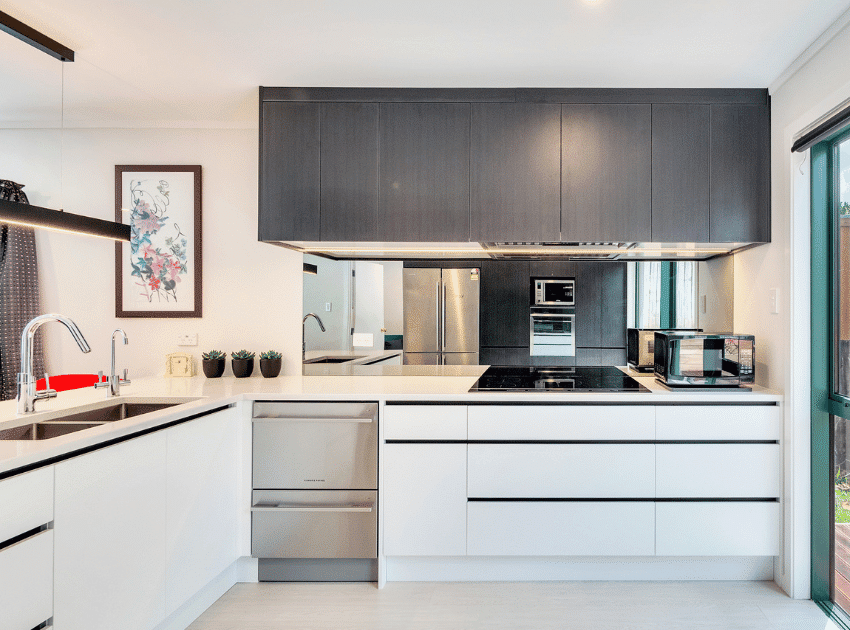
Ian and Fiona’s three bedrooms were upstairs. As retirement approached, the daily climb wasn’t sustainable. The solution: a ground-floor extension delivering a new master suite (bedroom + ensuite + walk-in wardrobe) plus a full kitchen rebuild for Fiona’s cooking and entertaining. The extension integrates seamlessly with the original house — visitors don’t read it as an “addition”.
Mt Roskill second-storey extension — doubling the floor area
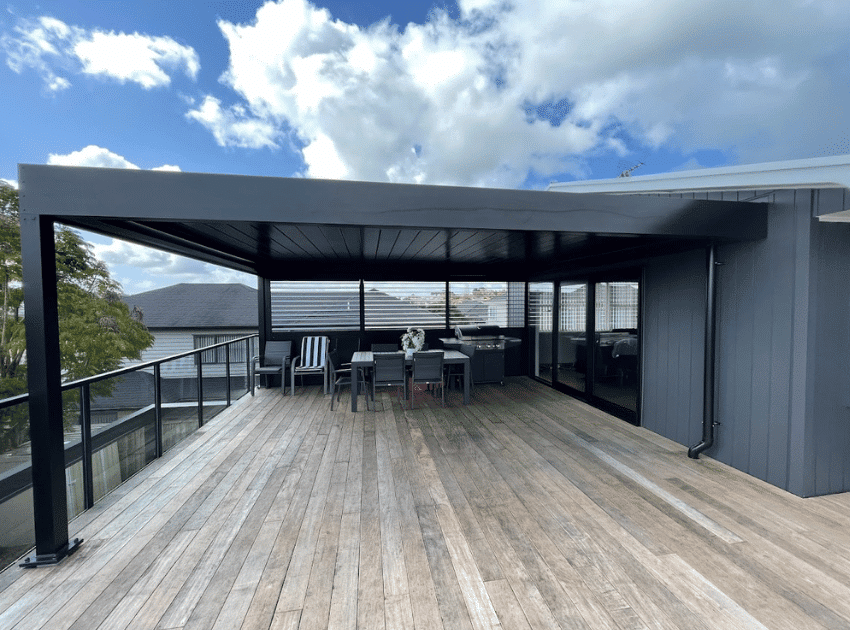
Suresh wanted an entertainment level for grandchildren — and a carport below. The design added a full upper-level living space topped with a Louvretec opening roof for year-round outdoor entertaining, plus a practical ground-level carport. The build doubled the home’s floor area while keeping the original footprint untouched.
Epsom reclad + second-storey — when selling isn’t an option
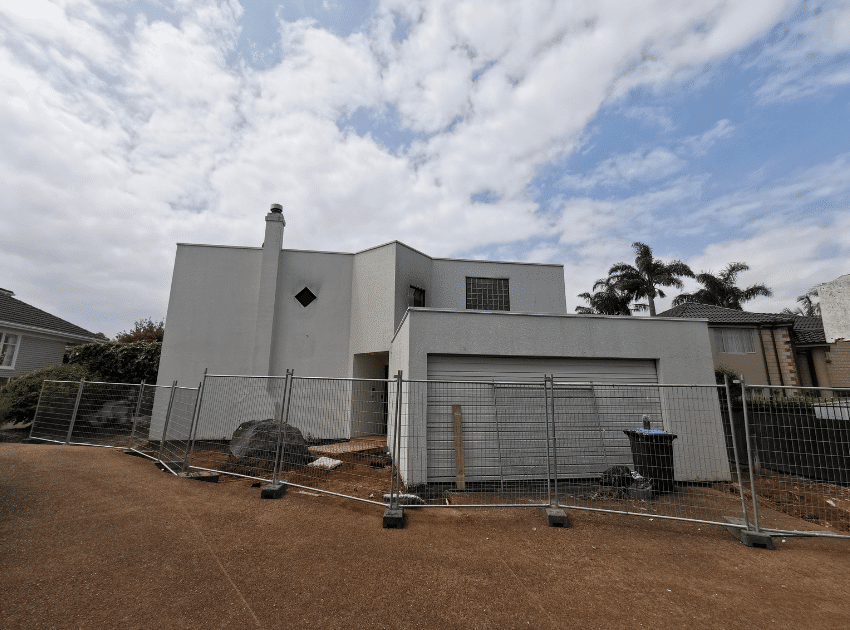
Lee’s family had owned the plaster-clad Epsom home for 15 years. By the time they came to us, leaks had made it virtually unsellable. We combined a full reclad with an 80m² second-storey addition above the garage in one continuous build — solving the weathertightness problem and adding the bedroom + ensuite they needed, all under one consent and one contract.
North Shore master suite — design-led harmony
Dylan and Hannah loved their North Shore home’s character — timber ceiling beams, unique layout — but morning bathroom queues and tight family routines were wearing thin. We added a second bathroom and reworked the master suite with a frameless walk-in rain shower, floating timber vanity, and warm LED lighting. The architectural feel of the original home was preserved and amplified.
6 pitfalls that blow extension budgets
- Underestimating total cost. Beyond construction, factor in professional fees (architect, engineer, planner), consent costs, temporary accommodation if needed, and a 15–20% contingency. The contingency isn’t optional in older Auckland homes.
- Skipping feasibility before design. Paying $20K–$50K for full architect drawings before checking what your zone actually allows is the most expensive mistake in Auckland extensions. Always feasibility-test first.
- Choosing builder on price alone. The lowest quote almost always becomes the most expensive job once variations stack up. A fixed-price contract from an experienced design-and-build is usually cheaper than the lowest “estimate” by the end.
- Ignoring Auckland’s climate. Humidity, prevailing wind, coastal exposure — material choice and weatherproofing detail all need to be Auckland-specific. Untreated steel fixings, standard timber joinery, ordinary galvanising all fail fast.
- Over-capitalising for the suburb. A $1M extension on a $1.4M home in Glenfield rarely recovers. Check comparable sold prices in your suburb. Know the ceiling.
- Poor integration with the existing home. The “obvious tack-on” extension is worth less than a cohesive design. Roofline, materials, internal flow all need to read as one home, not two.
How extensions add value
A well-executed $200K extension typically adds $150K–$300K of market value in established Auckland suburbs. The best returns come from:
- Kitchen-led ground-floor extensions — modern open-plan kitchen + dining + living with outdoor flow returns 80–120% of cost in school-zone suburbs.
- Master suite additions — particularly above-garage extensions in established suburbs.
- Adding bedrooms — each additional bedroom adds 10–15% to property value up to 4 beds; smaller incremental returns after that.
- Indoor-outdoor extensions — covered loggias, bifolds onto decks. Auckland’s climate makes this a value multiplier.
Suburb matters more than spec. A mid-range extension in Remuera or Grammar Zone returns more than a high-end extension in a $900K suburb. Check recent sold comparables before locking the brief.
Auckland home extension FAQs
Auckland home extensions in 2026 typically run $4,500 – $7,500 per square metre built, depending on spec, structural complexity, and site challenges. A 20m² single-room add lands at $55K–$90K. A 60m² ground-floor extension typically runs $130K–$280K. A 70m² second-storey extension runs $220K–$450K. Major combined projects (extension + reno + reclad) reach $1M+.
Plan on 6–12 months for a typical Auckland extension. The breakdown: 4–8 weeks design and consent drawings, 6–10 weeks council consent processing, 12–28 weeks construction, and 2–4 weeks for Code Compliance Certificate. Second-storey extensions and multi-room builds sit at the longer end.
Yes for almost all structural extensions. Any extension that affects the primary structure, weathertightness, plumbing, or electrical systems requires consent under the Building Act 2004. The main exceptions: decks below 1.5m off the ground, some accessory buildings under 30m², and detached granny flats under the new 70m² exemption. See our Auckland Council consent guide.
Out is typically faster, cheaper per m², and less disruptive. Ground-floor extensions cost 20–40% less per m² than second-storey work. Choose up if your section is small, if you’re already at site-coverage limits, or if you want to preserve outdoor space and capture view. See our second-storey guide for the structural considerations.
A well-executed $200K extension typically adds $150K–$300K of market value in established Auckland suburbs. The ratio is best for adding bedrooms or living space and worst for adding more bathrooms. The biggest driver of return is suburb — extensions in school-zone suburbs (Grammar, Epsom, Remuera) consistently outperform extensions in lower-value areas.
Depends on scope. Ground-floor rear extensions usually allow occupied builds with some inconvenience. Second-storey extensions and major structural work typically require the family to relocate for 3–6 months because the existing roof is temporarily removed. Most Auckland clients with major extensions arrange a short-term rental nearby or stay with family during the disruptive phase.
A renovation upgrades existing space — kitchens, bathrooms, layout changes, finishes. An extension adds new floor area — new rooms, second storey, or attached granny flat. The two are often combined: most major Auckland extensions also include renovation of the connecting spaces. Extensions trigger more consent work because they affect the building envelope.
The five most common: ground-floor rear extensions (kitchen/living/dining), master suite additions, second-storey additions, garage conversions to living space, and detached granny flats under the 70m² exemption. See our home extensions service page for examples of each.
Yes — and often a smart financial play. Combining an extension with a reclad (like our Epsom Lee’s Family project) saves $80K–$120K compared to doing them as separate projects, because scaffold, design, and project management are paid once instead of twice. The same logic applies to combining an extension with a full home renovation. See our recladding cost guide for the combination economics.
Ready to plan your Auckland home extension?
Get a 2-minute estimate, a free 30-minute consultation, or the 7 Things ebook — whatever stage you’re at.
Get an instant estimate → Book a free consultation → Download the 7 Things ebook →