
Written by Simon Liu, Founder of Add Value Renovations
Auckland’s stunning natural beauty comes with a wet reality: coastal winds, high humidity, and relentless rain. As a renovation builder, I’ve seen firsthand how these elements test the durability of our homes—especially older ones or those built during the leaky homes era.
This guide is for homeowners who want to build smart, dry, and future-proof homes in Auckland’s tough climate. Whether you’re re-cladding or planning a full renovation, here’s how to do it right.
FREE DOWNLOAD
The Complete Renovation Checklist
50 things to confirm before, during and after your renovation.
Get Free Guide →Quick Summary: Auckland’s climate demands more than good intentions—it requires proven weathertight design. In this guide, we break down common risks, the Four D’s of weathertight construction, and what to watch out for during renovations.
Why Weathertightness Is Crucial in Auckland Homes
Auckland presents a triple threat:
- Humidity: Moist air makes drying slow and creates mould risk inside walls.
- Driving Rain: Wind-driven rain finds even the smallest exterior gaps.
- Coastal Salt: Salt air corrodes fasteners and cladding if not properly selected.
These conditions helped fuel the leaky homes crisis of the 1990s/2000s, teaching the industry hard lessons about moisture control, material selection, and building detailing.
Simon’s Insight: “You can’t fight Auckland’s climate. Modern weathertight homes are designed to manage moisture—not try to block it entirely.”
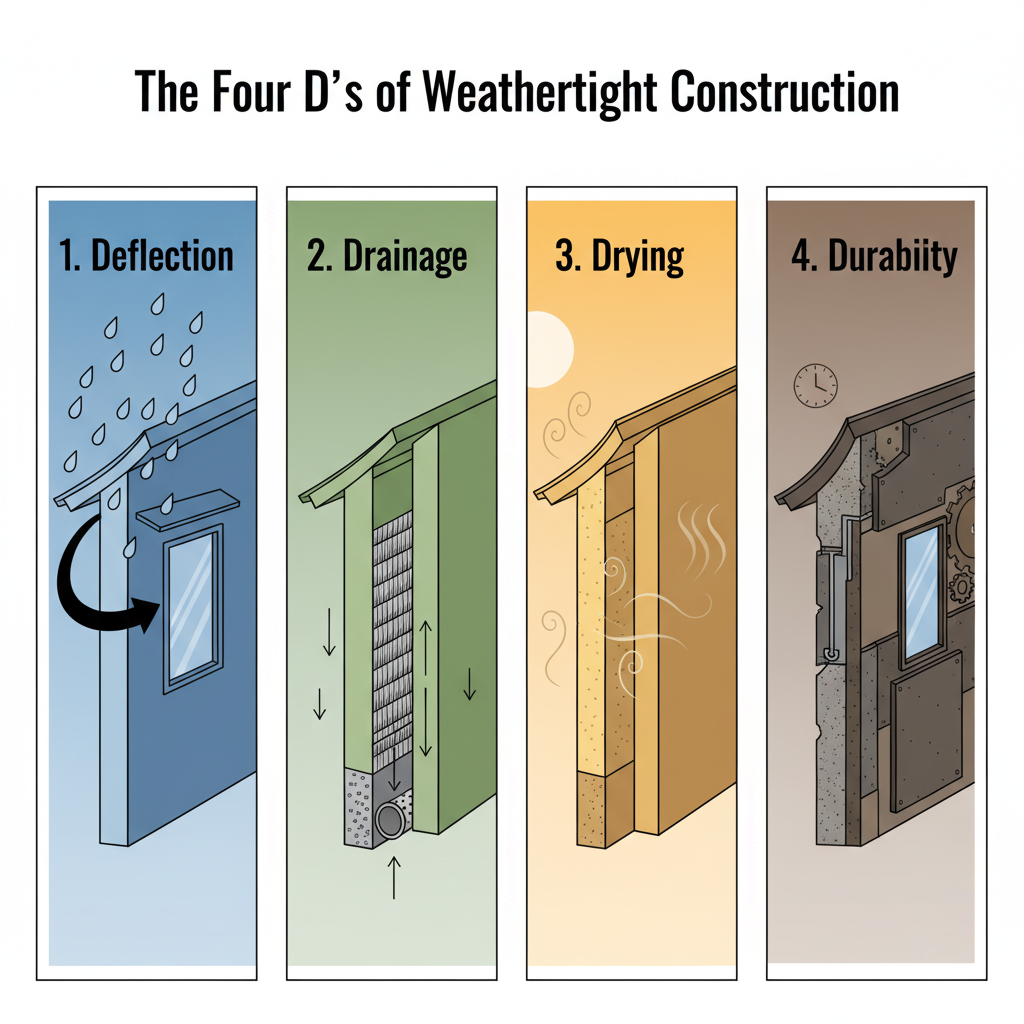
The Four D’s of Weathertight Construction
At Add Value Renovations, we follow this science-backed framework:
1. Deflection
- Use eaves, flashings, smart roof design, and cladding to deflect water before it enters.
2. Drainage
- Assume water will get in—then design clear drainage paths using a cavity system between cladding and framing.
3. Drying
- Promote airflow behind cladding to dry residual moisture and prevent mould.
4. Durability
- Select corrosion-resistant materials and proven, climate-tested cladding systems.
Simon’s Insight: “A good cavity system works like a raincoat—it blocks most water, but lets your home breathe.”
Common Failure Points in Renovations (And How We Solve Them)
Junctions & Penetrations
- Roof-to-wall joins, pipes, decks—these are leak hot spots. Our detailing and flashings follow NZBC best practice, every time.
Risky Design Features
- Flat roofs, internal gutters, and complex parapets look sleek—but demand precise design and expert waterproofing. Simpler is often smarter.
Window & Door Installs
- Windows need correct flashing tapes, head flashings, and sill support. We never cut corners here.
Deck Connections
- Decks tight to cladding are leak traps. We build them freestanding or add drainage membranes with clearance.
Planning a Weathertight Renovation? Start Here
1. Book a Weathertightness Assessment
- Especially important for homes built 1990–2005 or those showing signs of leaks.
2. Choose the Right Cladding System
- Timber weatherboards, fibre cement, or modern cavity plaster systems all work when installed correctly over a vented cavity.
3. Prioritise Good Design
- Engage architects who know how to detail high-risk areas. Every junction must be documented and built precisely.
4. Hire a Licensed, Proven Builder
- We’re LBPs with decades of experience. Ask to see past projects—there’s no substitute for experience.
Simon’s Insight: “Design matters. But execution matters more.”
Real Project: Remuera Re-Clad

A 1990s monolithic home with deck leaks, plaster cracks, and internal mould. We assessed, removed all old cladding, replaced rotted framing, and re-wrapped with modern materials. Then we:
- Installed vertical timber weatherboards over cavity
- Built a roof with membrane + drainage
The result: a beautiful, breathable, weatherproof home. For the first time in years, the owners could enjoy the rain—without dread.
Frequently Asked Questions About Weathertight Renovations
Q: What causes leaky homes in Auckland?
Poor design (flat roofs, no eaves), monolithic cladding, untreated timber, and bad workmanship in the 1990s–2000s.
Q: How much does a full re-clad cost?
Typically $400,000–$800,000 depending on size, cladding, and structural repairs.
Q: What is a cavity system?
A vented gap between cladding and framing that drains water and allows air to dry moisture.
Q: Is plaster cladding still allowed?
Yes, but only modern cavity-based systems installed by certified builders with proper detailing.
Q: Can I do this without a building consent?
Not likely. Any re-clad or structural work requires building consent from Auckland Council.
Worried About Weathertightness? Let’s Talk.
If you suspect moisture damage or are planning a renovation, let’s start with a consultation.
Why Add Value Renovations?
We’ve helped dozens of Auckland homeowners turn leaky liabilities into dry, healthy homes. We work with building science, not against it. Our goal is peace of mind that lasts decades.
Let’s future-proof your home, the right way.
Read more about our weatherproof renovation process →
Related guides
Auckland weather and renovation decisions:
- Renovating Through an Auckland Winter — why winter renovations work, planning around weather
- Membrane Roof Replacement Consent — common weathertight repair.
- Character Home Renovations — where weathertight issues hide.
- Auckland Council Building Consent Guide — weathertight-related consents.
- Seasonal Renovation Timing — weather as a scheduling factor.
- Case study: Epsom reclad + extension — major weathertight remediation.