Auckland · 2026 Edition
How Much Does a Kitchen Renovation Cost in Auckland in 2026?

Most Auckland kitchen renovations in 2026 cost between $35,000 and $85,000 excluding GST — with simple refreshes from around $20,000 and full reconfigurations with a butler’s pantry passing $120,000. Here’s exactly where that money goes, when you need a consent, and how to stop the budget running away on you.
A new kitchen is the single renovation that changes how a home feels to live in — and how it sells. It’s also the project Auckland homeowners ask us to price more than any other. This guide is built from hundreds of Auckland kitchens we’ve planned and built since 2014, priced the way we price every job: by a quantity surveyor, before a single tool comes out.
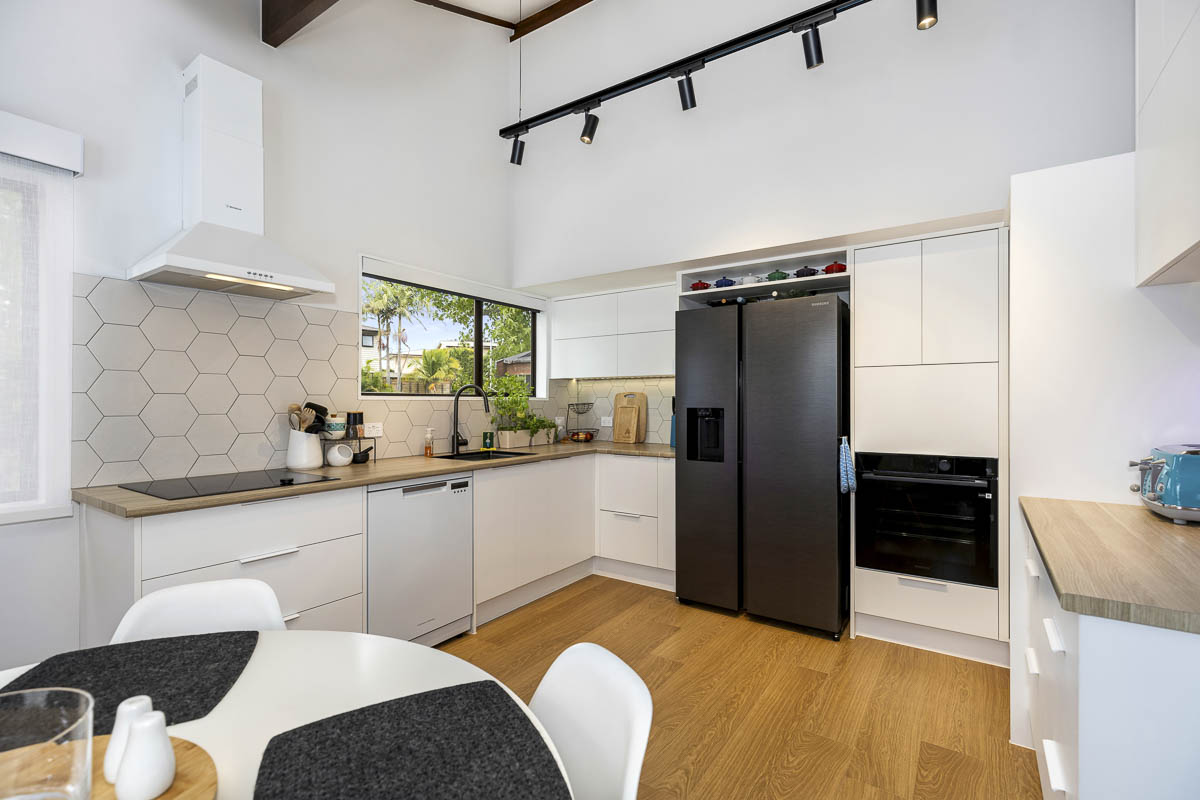
The short answer: what an Auckland kitchen costs in 2026
Most Auckland kitchen renovations in 2026 fall into three bands. These are real, all-up figures and exclude GST unless we say otherwise.
| Kitchen type | 2026 cost (excl. GST) | What you get |
|---|---|---|
| Cosmetic refresh | $20,000 – $30,000 | New benchtop, doors and handles, splashback, sink and tapware. Same layout, same footprint. |
| Mid-range full kitchen | $35,000 – $85,000 | Custom NZ-made cabinetry, stone benchtop, new appliances, new flooring, minor layout tweaks. Where most Auckland homeowners land. |
| High-end / full reconfiguration | $120,000+ | Full layout change, island, scullery or butler’s pantry, premium stone and appliances, joinery to the ceiling, integrated everything. |
Two things push Auckland higher than the rest of the country. The first is labour — skilled trades in Auckland run roughly $120–$150 an hour in 2026, and a kitchen touches almost every trade: builders, plumbers, electricians, tilers, plasterers and painters. The second is demand. Good trades are booked out, and you pay for the ones who turn up when they say they will and finish to a standard you’d be happy to show off.
Where the money actually goes
People assume the cabinets are the biggest line. They’re a big one, but they’re rarely the whole story. A typical mid-range Auckland kitchen breaks down roughly like this:
- Cabinetry and joinery (30–40%): Custom NZ-made cabinets cost more than flat-pack, but they fit your space exactly and last decades. This is not where to cut corners.
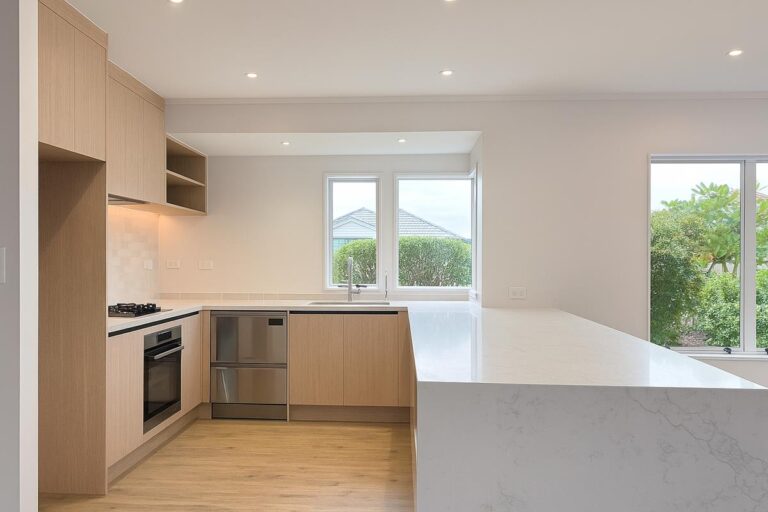
- Benchtops (10–15%): Laminate is the budget-friendly option; engineered stone and natural stone sit at the top. An island bench with waterfall ends adds materials and labour.
- Appliances (10–20%): Entirely your call. You can spend $6,000 or $30,000 here depending on the brand and whether everything is integrated.
- Trades and installation (20–30%): Plumbing, electrical, tiling, plastering, painting and the build itself. Moving the sink or hob to a new wall means new plumbing and wiring runs — a common reason quotes jump.
- Flooring, lighting and finishing (10%): The details that make a kitchen feel finished rather than functional.
The single biggest cost driver is the layout. Keeping your sink, hob and fridge roughly where they are keeps the plumbing and electrical simple. The moment you go open-plan or move services across the room, costs climb — sometimes a lot. If an open-plan kitchen is the goal, it’s worth understanding what’s involved early; our open-plan kitchen page walks through it.
The number that decides your budget
Before you fall in love with a benchtop, answer one question: are you keeping the layout or changing it? A like-for-like kitchen in the same footprint is the most predictable renovation we do. The moment a wall comes out or the sink moves, you’ve added a consent, structural work, and new services — and you’ve roughly doubled the complexity. Decide this first; everything else follows from it.
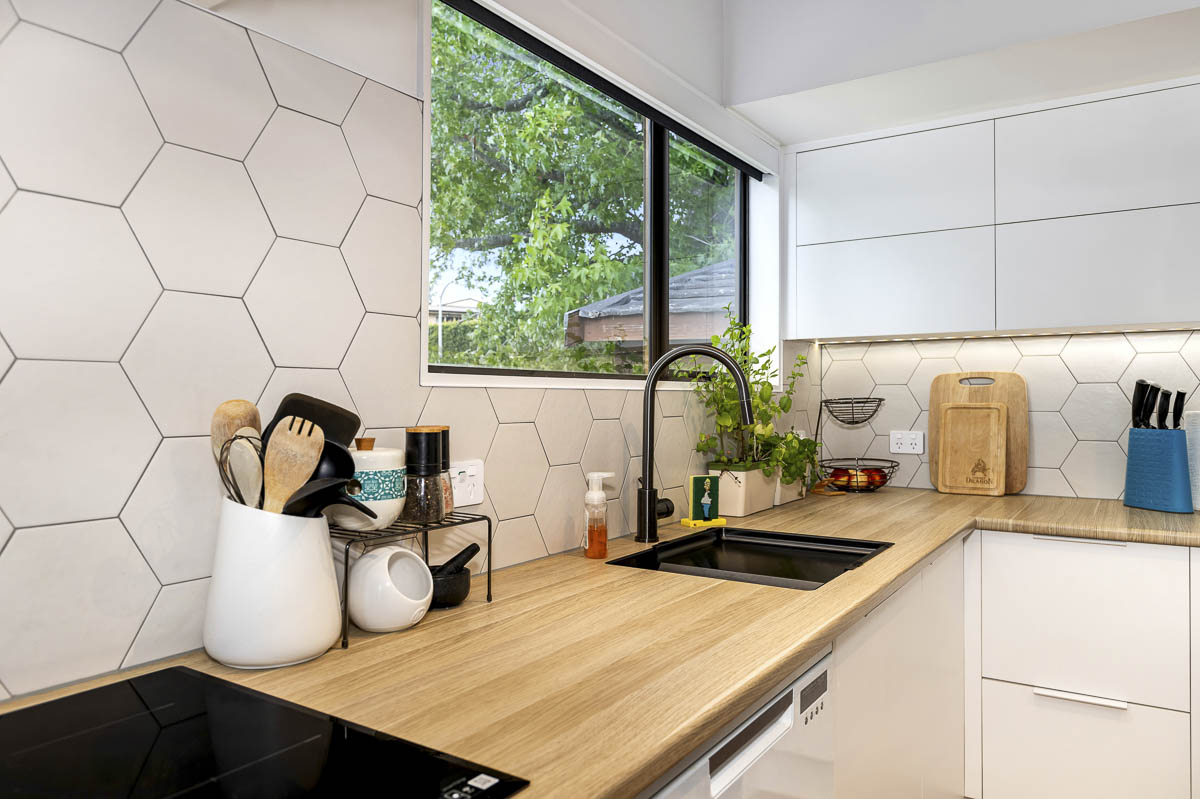
Do you need a building consent for a kitchen renovation?
Here’s the good news for most people: a straightforward kitchen renovation usually does not need a building consent. Under Schedule 1 of the Building Act 2004, replacing cabinetry, benchtops, the sink and fixtures in their existing positions is generally exempt work.
You will need an Auckland Council building consent when the job involves any of these:
- Removing or altering a load-bearing wall — the most common trigger, because so many Auckland kitchen projects open up to the living area.
- Altering or extending drainage — for example, relocating the sink or dishwasher to a new wall.
- Structural changes of any kind, including new openings or beams.
Even when a consent isn’t required, the work still has to comply with the Building Code, and some of it must be done by licensed people. Electrical work must be carried out by a registered electrician who issues a Certificate of Compliance, and sanitary plumbing and gas work must be done by licensed tradespeople. Auckland Council works to a statutory 20-working-day timeframe for building consents, though you should plan for longer in practice — and budget roughly $2,500–$6,500 in consent and inspection fees when structural work is involved.
How long does a kitchen renovation take?
On site, a kitchen is faster than people expect — but the lead time before work starts is what catches everyone out. Custom cabinetry alone takes four to eight weeks to make once your design is locked in, so the planning stage is where the calendar really lives.
| Kitchen type | On-site time | Plan for (incl. design + cabinetry lead time) |
|---|---|---|
| Cosmetic refresh | 1–2 weeks | 4–6 weeks start to finish |
| Mid-range full kitchen | 4–6 weeks | 10–14 weeks start to finish |
| High-end / structural | 6–10 weeks | 4–6 months incl. consent |
The single best thing you can do to keep a kitchen on schedule is to make every selection — cabinetry, benchtop, tapware, appliances, tiles — before the build starts. Half-finished decisions are the number-one cause of stalled jobs.
The extras that catch people out
The figures above are for the kitchen itself. These are the line items that turn a $40,000 job into a $50,000 one if nobody warns you:
- Contingency. Always hold 10–15% back. Older Auckland homes hide surprises behind the cabinets — rot, dated wiring, uneven floors, asbestos in pre-1990s linings. We’d rather build the buffer in than spring it on you mid-job.
- Making good. When the old kitchen comes out, the wall and floor behind it often need patching, levelling and painting that wasn’t in the original scope.
- Temporary kitchen. You’ll be without a kitchen for a few weeks. A camp stove and the BBQ get old fast — factor in the inconvenience, and a little takeaway budget.
- Appliance creep. The induction cooktop becomes a pyrolytic oven becomes a $4,000 fridge. Set the appliance budget early and stick to it.
Does a kitchen renovation add value in Auckland?
In the Auckland market, a well-executed kitchen is one of the most reliable ways to lift a home’s value and saleability. Buyers make up their minds in the kitchen. A dated kitchen is the thing that makes an otherwise good house feel “needs work” — and that perception costs far more at sale than the renovation would have.
The trick is matching the spend to the home and the suburb. A $130,000 designer kitchen in a modest first-home suburb won’t return the outlay. The same kitchen in a character villa in Remuera, Ponsonby or Mt Eden can be exactly the right move. We renovate kitchens across central Auckland — including Epsom and Grey Lynn — and the right number is always the one that suits your home and how long you plan to stay in it.
You can see this in our recent work: a whole-house kitchen with a stone island and butler’s pantry in Remuera, a modern-classic bungalow kitchen in West Auckland, and Kane & Janet’s open-plan kitchen-and-dining in Lynfield — each one priced up front and matched to the home.
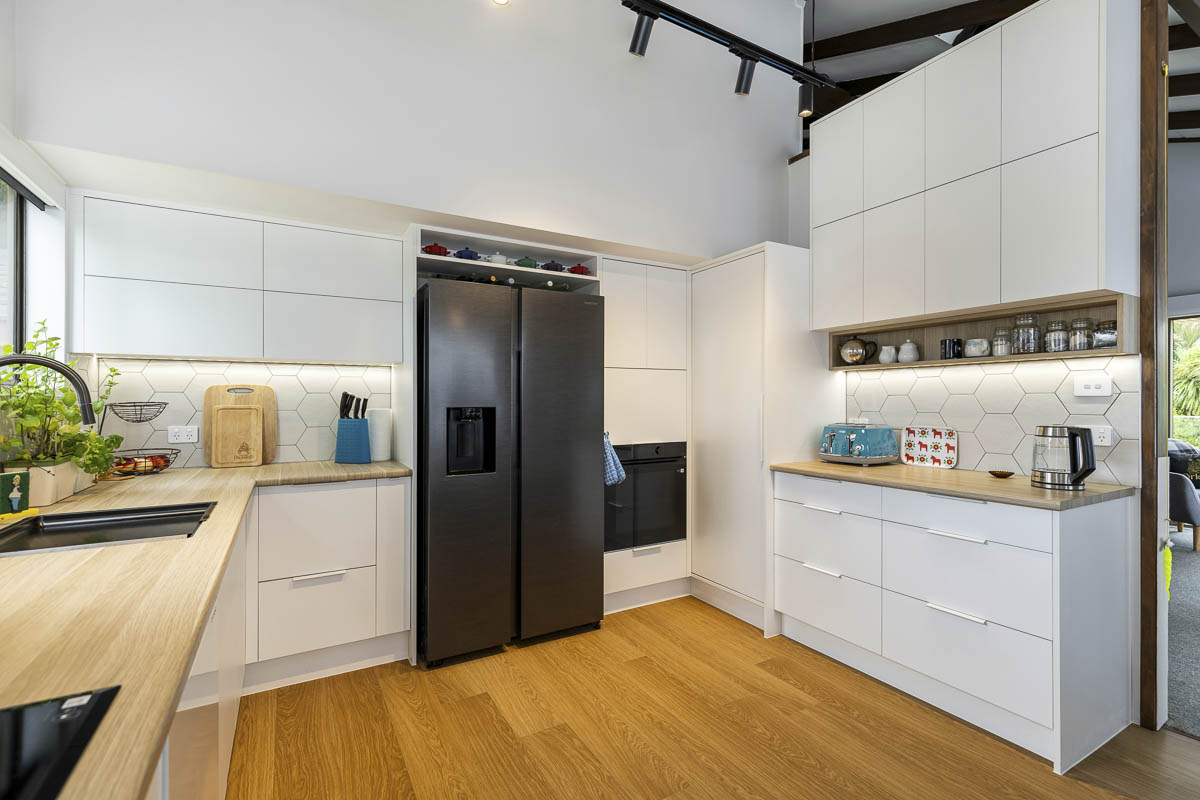
Recent project: Kane & Janet’s open-plan kitchen, Lynfield
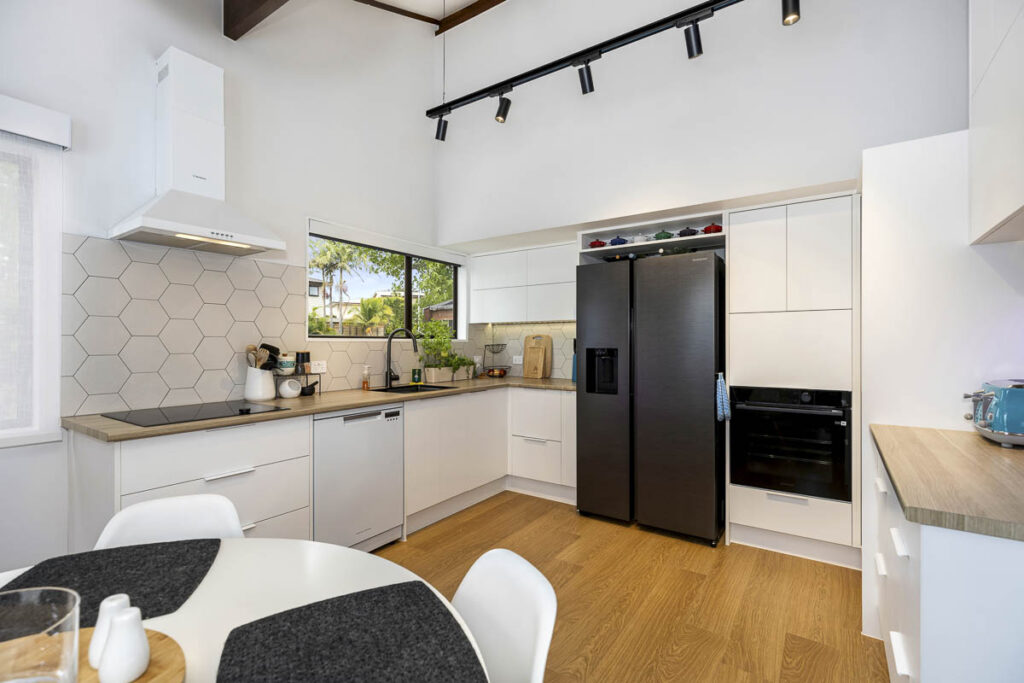
Kane and Janet were weighing up whether to sell or stay. The kitchen was small and closed off from the dining room. Rather than move, they had us remove the dividing wall and open the kitchen into one bright, open-plan space — timber benchtop, matte-black tapware, custom cabinetry and under-cabinet lighting. A reconfiguration like this typically sits in our $35,000–$85,000 band, depending on cabinetry and finishes.
Why a fixed price beats a “rough estimate”
Plenty of kitchen quotes in Auckland are really just estimates with a confident font. They look sharp until the variations start arriving. The way we work is different: we have the scope priced properly by a quantity surveyor before a single tool comes out, so the number you sign is the number you pay — barring changes you choose to make. For a kitchen, where so much hides behind the old cabinetry, that certainty is worth a great deal.
It also means the conversation up front is honest. If your budget and your wish-list don’t line up, you’ll know before you commit, not halfway through the job. You can see the full picture of how we approach kitchens on our kitchen renovations page.
Kitchen renovation FAQs
A cosmetic refresh runs $20,000–$30,000, a mid-range full kitchen $35,000–$85,000, and a high-end or full reconfiguration $120,000+ — all excluding GST. Most Auckland homeowners land in the mid-range band.
Usually no. Replacing cabinetry, benchtops and fixtures in their existing positions is generally exempt under Schedule 1 of the Building Act 2004. You do need an Auckland Council consent if you remove or alter a load-bearing wall, alter or extend drainage, or make any structural change.
On site, a cosmetic refresh takes 1–2 weeks, a mid-range kitchen 4–6 weeks, and a high-end or structural job 6–10 weeks. Allow extra time up front — custom cabinetry takes four to eight weeks to make once your design is locked in.
Cabinetry and joinery is the largest single line at 30–40% of the budget. After that, the biggest cost driver is changing the layout — moving the sink, hob or fridge means new plumbing and wiring runs.
Yes, most people do. You’ll be without a working kitchen for the duration, so set up a temporary kitchen with the fridge, microwave and a kettle in another room and plan for a few more takeaways than usual.
In Auckland, usually yes — the kitchen is where buyers form their impression. The key is matching the spend to the suburb and not over-capitalising; a mid-range update often returns more than a luxury fit-out in the same home.
Hold 10–15% of the budget back. Older Auckland homes regularly hide rot, dated wiring or uneven floors behind the old cabinetry, and the contingency means a surprise doesn’t stop the job.
Yes. We have every job priced by a quantity surveyor before work starts, so the number you sign is the number you pay — barring changes you choose to make along the way.
Ready to price your kitchen?
Three easy ways to start — get a ballpark in minutes, book a free chat, or grab the homeowner’s guide.
Get an instant estimate → Book a free consultation → Download the 7 Things ebook →