Auckland · 2026 Edition
Recladding Cost Auckland 2026: Real Numbers by Home Size & Cladding System

Recladding an Auckland home in 2026 typically costs $135,000 to $500,000. The headline range hides what really drives the bill — house size, the cladding system you replace with, and how much rotten timber framing sits behind the old cladding.
The lowest-cost reclads are single-storey weatherboard homes with sound framing in modern fibre cement; the most expensive are two-storey monolithic plaster homes with widespread framing rot. This guide breaks down real cost ranges by house size and cladding system, what’s included and what isn’t, and how a QS-backed fixed price works so you don’t get surprised mid-build.
Cost by house size and cladding system
The single biggest cost driver is the wall area being recladded. A two-storey 250m² home has nearly double the wall area of a single-storey 150m² home, and reclad pricing scales fairly linearly with wall area once you’re past the fixed costs of scaffold, consent, and design.
| House size & layout | Weatherboard | Fibre cement | Monolithic plaster |
|---|---|---|---|
| 150m² single-storey | $135K–$190K | $120K–$170K | $155K–$220K |
| 200m² single-storey | $165K–$240K | $150K–$215K | $190K–$280K |
| 200m² two-storey | $210K–$305K | $190K–$275K | $240K–$355K |
| 250m² two-storey | $245K–$355K | $220K–$320K | $280K–$415K |
| 300m²+ two-storey | $290K–$430K | $265K–$390K | $340K–$500K+ |
These ranges assume sound timber framing with no significant rot. Add 15–30% for projects with extensive treated framing replacement — most monolithic plaster homes from 1994–2004 fall into this category once stripped.
What the cost includes
A properly scoped Auckland reclad fixed price covers six work categories. If a quote you’re comparing doesn’t list all six, it’s underpriced and you’re going to get variations later.
- Weathertightness investigation and report — moisture testing, invasive checks at high-risk junctions, documented findings used to scope the work.
- Design and consent documentation — architectural drawings, cladding specification, LBP records, producer statements, and the consent application itself.
- Site preparation and scaffolding — scaffold for the duration of the build, site fencing, weather protection during strip-out, waste removal.
- Strip-out and framing inspection — removing the existing cladding, exposing every section of framing, replacing any rotted or wet timber with H1.2 treated framing to current Code.
- New cladding installation — the new cladding system itself, including drained cavity battens, building wrap, flashings, sealants, and exterior trim work.
- Joinery, paint, and Code of Compliance Certificate — reinstall or replace windows and doors with correct flashings, full exterior repaint, final council inspections, and CCC issued.
What the cost doesn’t include
A reclad fixed price is for the exterior envelope. The following are common “while we’re at it” additions clients often consider but should price separately:
- Interior work — kitchen, bathrooms, flooring, painting inside undamaged walls. Many clients combine a reclad with a full interior refresh because the scaffold and disruption are already paid for.
- Insulation upgrades — with the walls open, this is the cheapest time to upgrade wall insulation. Typically $4,000–$10,000 for a full home.
- Roof replacement — if the roof is also end-of-life, replacing it during a reclad saves on scaffold. Add $25,000–$80,000 depending on area and material.
- Second-storey extension or alterations — combining structural alterations with a reclad reduces the per-square-metre cost of both. The Epsom project combined a full reclad with a second-storey extension above the garage.
- Decks, landscaping, and exterior work — decks that block cladding access usually need lifting or rebuilding; budget separately.
The hidden cost: framing damage allowance
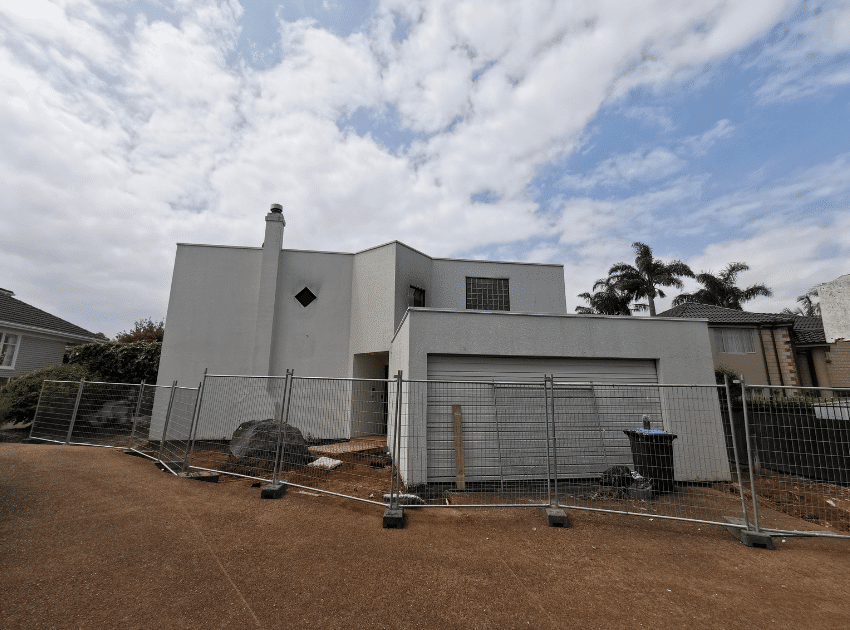
Until the existing cladding comes off, no builder can give you a guaranteed price for framing replacement. What separates a properly priced reclad from a quote-low-and-vary-later operator is whether the contract includes a documented framing damage allowance.
On a typical Auckland reclad we build a treated framing replacement allowance into the fixed price:
- Plaster homes 1994–2004: 15–25% framing replacement allowance built in — it’s rarely zero on these homes.
- Weatherboard homes pre-1990: 5–15% allowance, mostly at bottom plates and corner studs.
- Homes with no known weathertight history: 5–10% allowance as standard.
Why the allowance system protects you
If actual damage falls within allowance, the fixed price holds. If it’s materially worse, we document it with photos and price the extra as a variation you approve before any work proceeds. That avoids the two worst outcomes: builders who lowball then ambush you with framing variations once the cladding is off, and builders who pad such a large safety margin that the quote is uncompetitive.
Buying or owning a plaster home?
Get the reclad number before you commit — $99 incl GST, credited if you build.
A 12-page Recladding Cost Plan built from your council property file and inspection reports: the number, the range either side of it, and the one survey worth paying for before you go unconditional. Five working days, no site visit needed.
Order a Recladding Cost Plan →Cost by replacement cladding choice
The cladding system you choose affects both the up-front bill and the resale value. Our recladding service page walks through each system in detail; for cost planning, here’s how they compare.
Fibre cement (James Hardie Linea, Stria, Axon)
Currently the most popular reclad choice in Auckland: typically the cheapest installed cost, lowest maintenance, and a strong resale story. Installed $/m² runs about 10–15% below cedar weatherboard. The Linea horizontal profile is the most popular; vertical options like Axon suit modern designs.
Cedar or composite weatherboard
A premium look, particularly on villas, bungalows, and character homes — 10–20% more than fibre cement installed. University of Auckland resale research consistently shows weatherboard-recladded homes sell at price parity with never-leaky properties, the strongest resale outcome of any system.
Modern plaster on cavity systems
For owners who want the plaster aesthetic without the original leaky-home construction risk. Modern direct-fix or cavity-based plaster systems are safe when correctly installed, but the “plaster home” market stigma persists — resale research suggests homes recladded back into plaster still attract a 6% discount versus comparable weatherboard or fibre cement. Cost is comparable to fibre cement.
Brick veneer, schist, and masonry
Used less often in Auckland reclads because of weight, install time, and cost — typically a 20–30% add over fibre cement. Best applied to one elevation as a feature rather than the whole home.
Mixed-material recladding
The most popular modern approach: fibre cement to the main walls with vertical cedar or stone feature accents to the entry or one elevation. Adds 5–10% over a single-material reclad but delivers a stronger architectural result. The Epsom project used this approach.
How AVR prices a reclad
Our recladding fixed price is built bottom-up by a Quantity Surveyor working from the architect’s drawings and the weathertightness investigation. Every line of the scope — cladding boards, fasteners, sealants, flashings, framing replacement allowance, scaffold weeks, consent fees — is measured and priced individually. The fixed price is what goes into the Master Builder contract you sign, and it’s the price you pay unless a documented variation is approved.
For a full breakdown of how renovation pricing works across all Auckland project types, see our Auckland renovation costs guide.
Project spotlight: Epsom reclad + second-storey extension
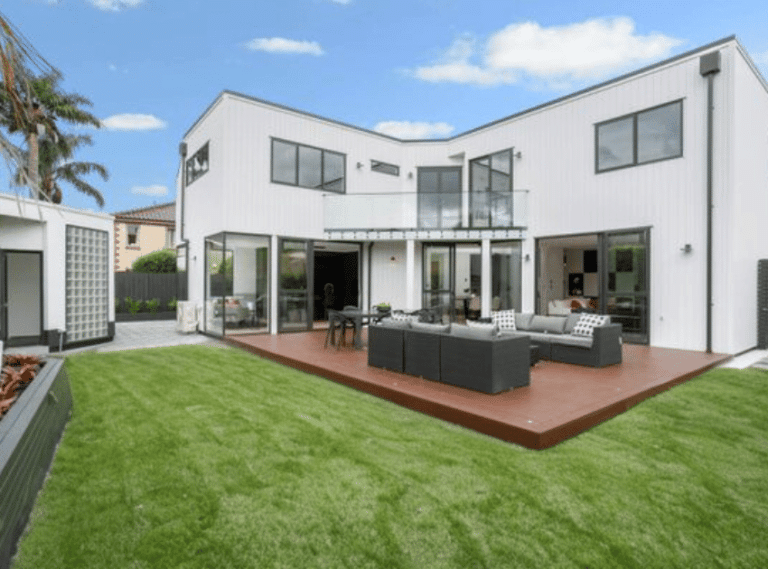
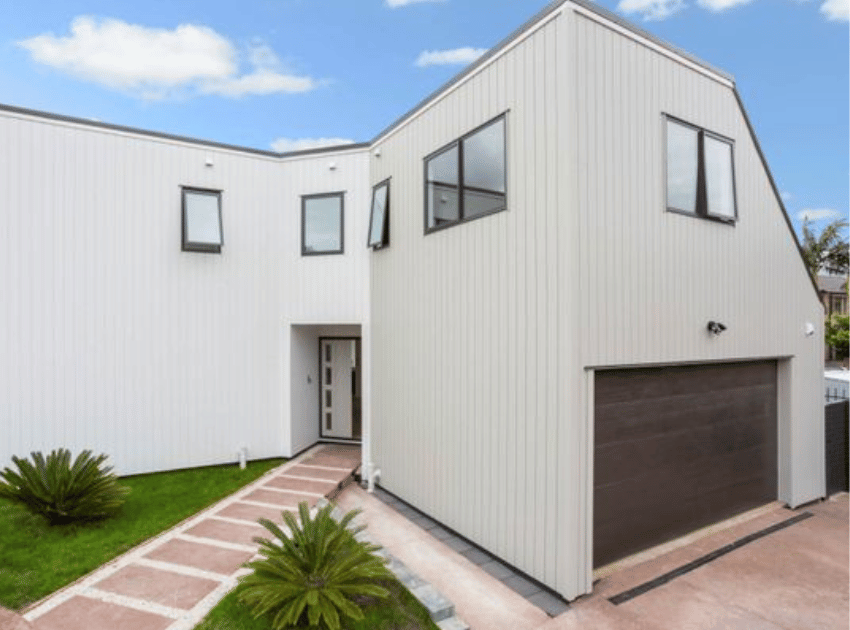
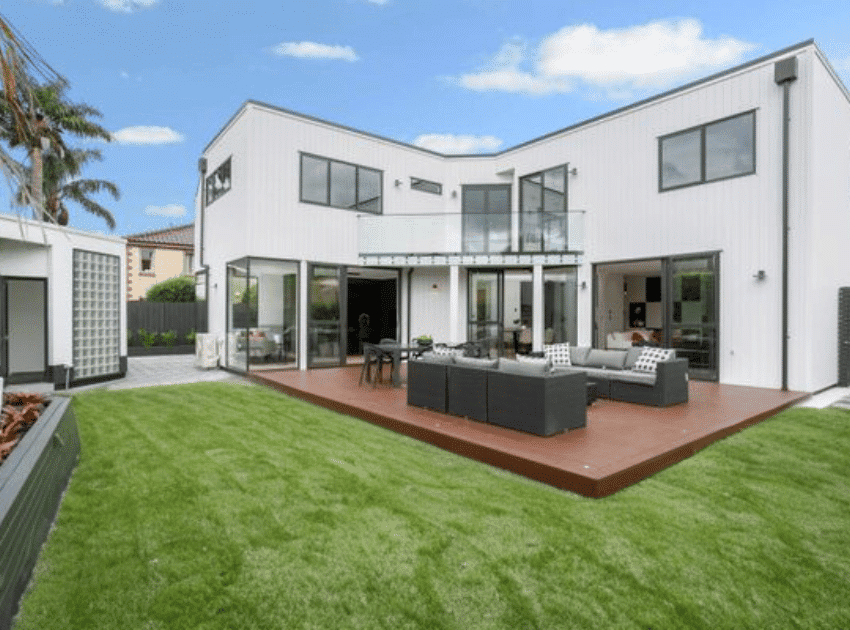
This Epsom home combined a full reclad with a second-storey extension above the garage and a mixed-material finish — fibre cement to the main walls with vertical weatherboard feature accents. Combining the structural alterations with the reclad reduced the per-square-metre cost of both pieces of work.
How long until the money is recovered at resale?
This is the question every client asks. The University of Auckland resale data is clear:
- Weatherboard reclad: recovers 90–110% of project cost at resale — sometimes higher in Remuera, Devonport, Ponsonby, and other premium markets.
- Modern fibre cement reclad: recovers 80–100% of project cost, particularly on contemporary homes.
- New monolithic plaster reclad: recovers 60–75% of project cost — the cladding-type stigma persists in buyer minds.
The alternative — selling a leaky home unreclad — typically costs 9–15% of property value in price discount, which on most Auckland homes is more than the reclad would have cost.
Recladding cost FAQs
The cheapest realistic full reclad on an Auckland home is around $120,000–$135,000, for a small (under 130m²) single-storey home in fibre cement with no framing damage. Anything quoted below $100,000 for a full reclad is either a partial repair, a quote with hidden exclusions, or an underpriced operator who will vary up later. Be very cautious with low-end quotes.
Yes — if the weathertightness failure is localised to one elevation, one wall, or a small number of high-risk junctions, a partial reclad in the $40,000–$120,000 range can be sensible. A proper investigation tells you whether the failure is localised or systemic. Partial reclads only work where the rest of the home is genuinely sound; otherwise you pay for two reclads in three years.
Most recladding projects only require building consent, not resource consent. Resource consent is occasionally needed if the reclad materially changes the building’s external appearance (changing cladding type from plaster to weatherboard, say) and the home sits inside a Special Character Area overlay. Auckland Council confirms this at pre-application. Resource consent fees are typically $3,000–$8,000 on top of building consent.
Recladding is restricted building work under the Building Act, so the cladding installation itself must be carried out or supervised by a Licensed Building Practitioner. Demolition of the existing cladding, painting, and general site labour can sometimes be done by the client if agreed in advance, but the savings are usually small relative to the total — most of the cost is materials, scaffold, and skilled trades, not unskilled labour.
Most Auckland reclads are funded through a renovation top-up on the existing mortgage, an equity release loan, or a dedicated renovation loan. Major lenders treat consented recladding favourably because it restores or increases the home’s collateral value. Some clients use an interest-only renovation loan during the build and refinance once the Code of Compliance Certificate is issued. We can introduce you to brokers who specialise in renovation finance.
The ranges in this guide are accurate to roughly ±15% for a typical Auckland home in average condition. The biggest unknowns at quoting stage are framing damage extent and any structural alterations you want combined with the reclad. A free initial site visit and weathertightness check is the fastest way to get a tighter number for your home.
Get a real recladding cost estimate in under 2 minutes
Three ways to move forward — instant estimate, a free on-site weathertightness check, or our renovation ebook.
Get an instant estimate → Book a free consultation → Download the 7 Things ebook →