
Auckland’s Recladding
& Leaky Home Specialists
Add Value Renovations is a design-and-build team replacing failed monolithic, weatherboard, and stucco cladding across Auckland — full weathertightness investigations, consented recladding, and a 10-Year Master Builder Guarantee on every contract of $30,000 or more.
No obligation · Free moisture & weathertightness check · Auckland-wide
 Registered
Master Builder
 HOY Gold
2025
 Licensed Building
Practitioner
 $2M Public
Liability
Leaky cladding doesn’t just look bad — it rots your home.
Failed monolithic plaster, untreated timber framing behind weatherboards, and aging stucco — every Auckland weathertightness failure starts the same way. By the time you see the staining, the bubble in the paint, or the soft spot in the corner, the damage behind the wall is usually months ahead. Auckland’s wet climate is unforgiving. Recladding is rarely about appearance; it’s about saving the bones of your home before the framing has to come out too.
One team. Full responsibility.
Investigation, design, consent, and recladding integrated under one roof — so your weathertightness project has one team accountable from the first moisture test to the final paint coat.

One contract. One point of accountability.
Weathertightness Investigation First
Moisture readings, invasive timber framing checks, junction analysis, and water-tightness diagnosis before any quote — so you know what you’re dealing with.
Fixed Pricing Before You Sign
Our Quantity Surveyor prices the scope line-by-line off measured drawings. The fixed price is locked in your Master Builder contract — including treated framing replacement allowances.
Building Consent Handled
Recladding triggers building consent. We prepare and lodge all documentation with Auckland Council, including the LBP records and weathertightness reports needed.
10-Year Master Build Guarantee
Every recladding project over $30,000 is covered by the Registered Master Builders 10-Year Guarantee — workmanship, weathertightness, and structural integrity.
From inspection to weathertight.
Recladding is a five-stage journey. We organise it into three clear phases so you always know where you stand and what is next.
Investigation & Scope
Free site assessment — moisture mapping, junction checks, framing exposure where needed. We tell you what’s failed, what’s salvageable, and what the recladding scope needs to cover.
2–4 weeks
Design, Pricing & Consent
Cladding system selected to suit your home and budget, drawings prepared, QS-priced fixed quote, then building consent lodged with Auckland Council.
6–10 weeks
Strip, Reframe & Reclad
Existing cladding removed, rotten framing replaced with treated timber, new cavity system installed, new cladding fitted to spec, then painted and signed off to Code of Compliance.
8–16 weeks
Every Auckland cladding type, handled.
We work with every common cladding system in Auckland — from heritage weatherboards to modern fibre cement. We’ll recommend the right replacement system for your home’s age, location, and budget.
Monolithic Plaster Replacement
The classic leaky-home cladding from the 1990s–2000s. Full strip and replace with a modern direct-fix or cavity-based plaster system — or change cladding type entirely.
Talk to us about plaster homes →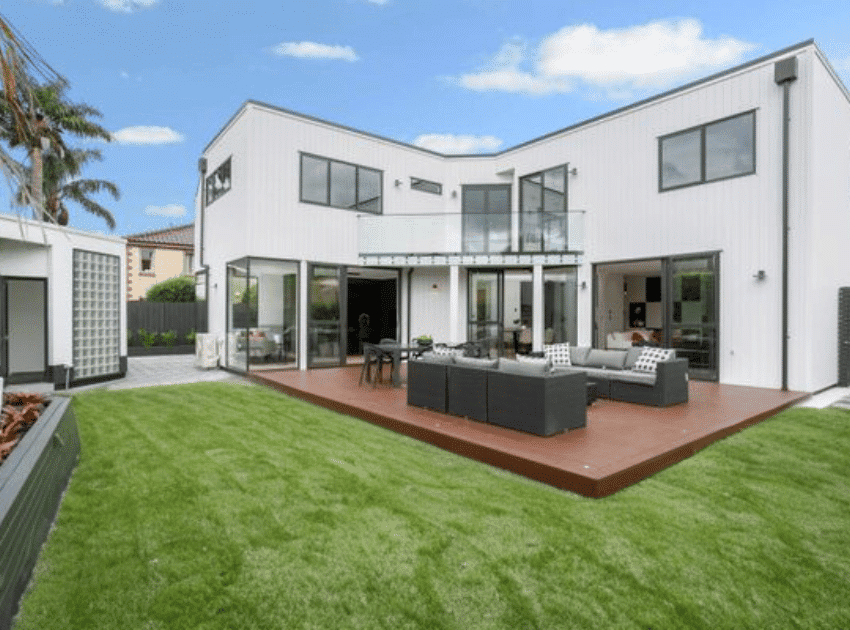
James Hardie & Fibre Cement
Modern fibre cement systems — Linea, Stria, Axon, and vertical plank profiles. Low maintenance, fire-resistant, and the most popular reclad choice in Auckland today. Used on our Epsom project (pictured).
See fibre cement options →Timber & Composite Weatherboard
Replace rotted timber boards with new cedar, pine, or pre-finished composite. Heritage-style profiles available for villas and bungalows where character matters as much as weathertightness.
Talk to us about weatherboard →Masonry & Schist Cladding
Brick veneer replacement, schist feature walls, and masonry repairs. Heavier system with longer install time but excellent thermal and weathertight performance.
Talk to us about masonry →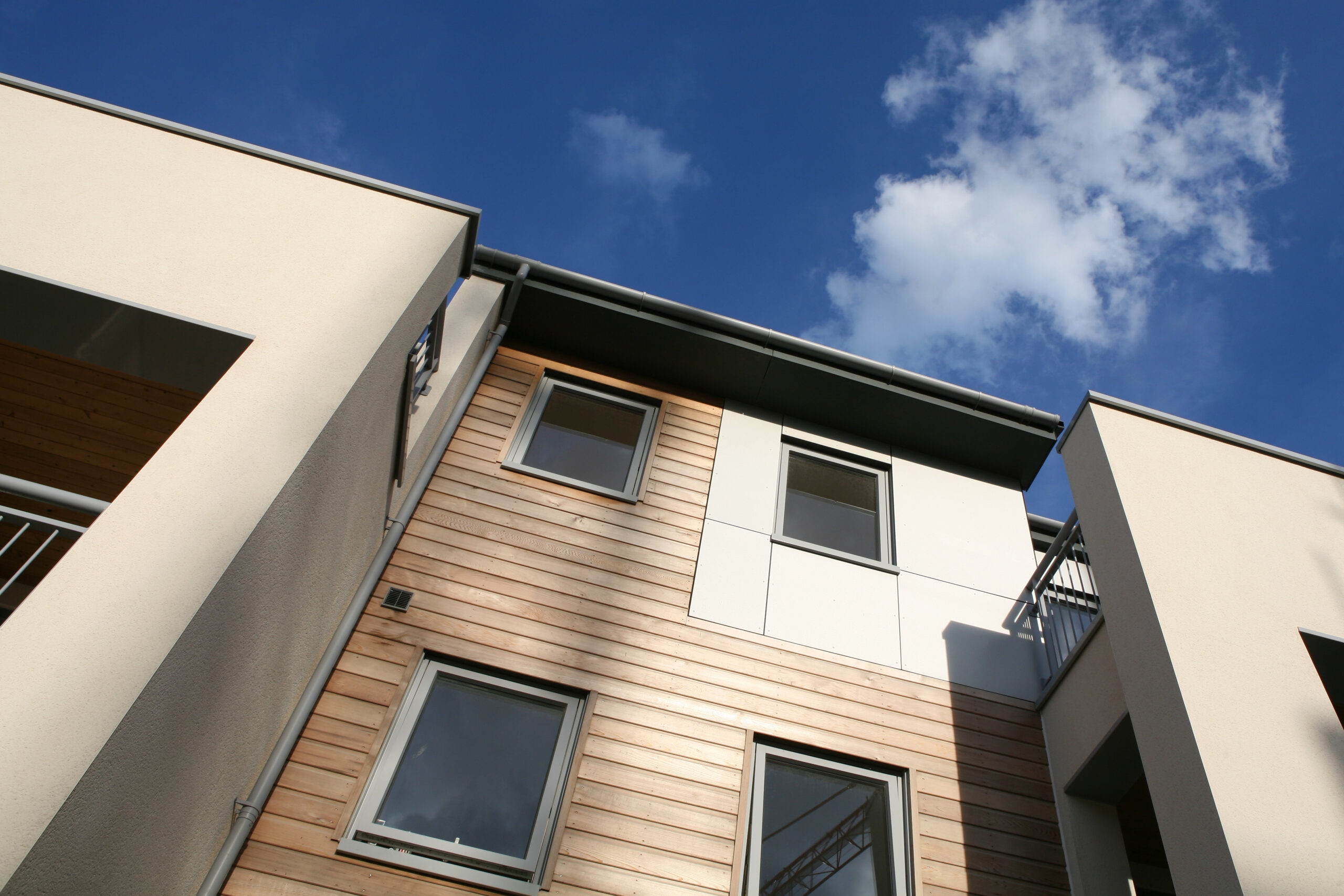
Mixed-Material Recladding
Combine fibre cement, vertical cedar, and render for a modern Auckland family home look — while keeping each cladding system in its correct application and detail.
Design with mixed cladding →What Recladding Costs in Auckland
Full Auckland cost breakdown by cladding type — typical projects sit between $80K and $300K depending on house size, system, and framing damage extent.
See the 2026 cost guide →Epsom plaster home reclad — before, after, inside.
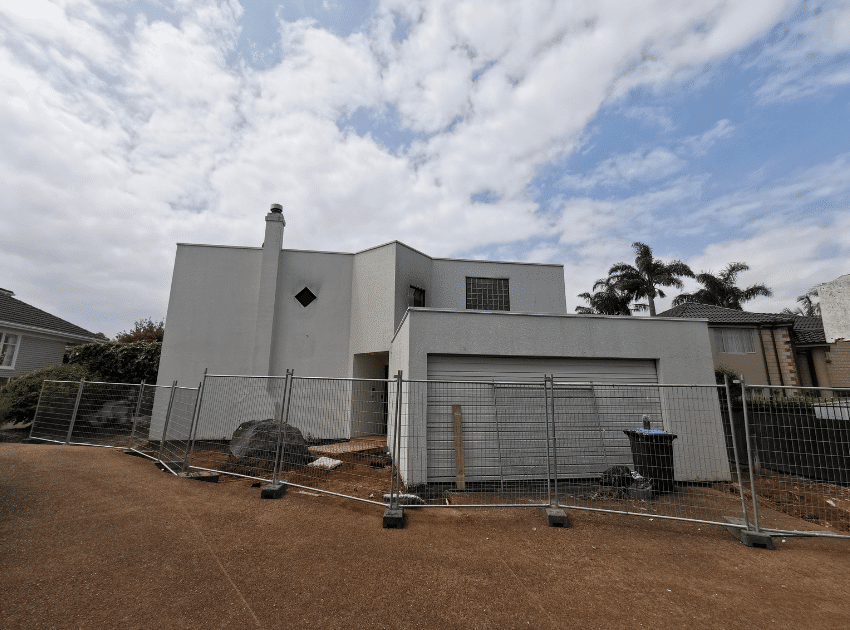
Lee’s family had owned their plaster-clad Epsom home for over 15 years when hidden leaks and rotten framing made it unsellable. We stripped it back to the bones, replaced the treated framing, recladded the whole house in fibre cement, and added a second storey — all under one consented design-and-build contract.
Failed Monolithic Plaster
Years of hidden leaks behind 1990s plaster cladding had caused widespread mould, rot, and compromised timber framing. The house was virtually unsellable when Lee’s family called us in.
View the full case study →Recladded + Second Storey Up
Stripped to the framing, treated timber replaced, fully recladded in fibre cement vertical weatherboard — plus a second storey extension over the garage adding a new master bedroom and ensuite.
View the full case study →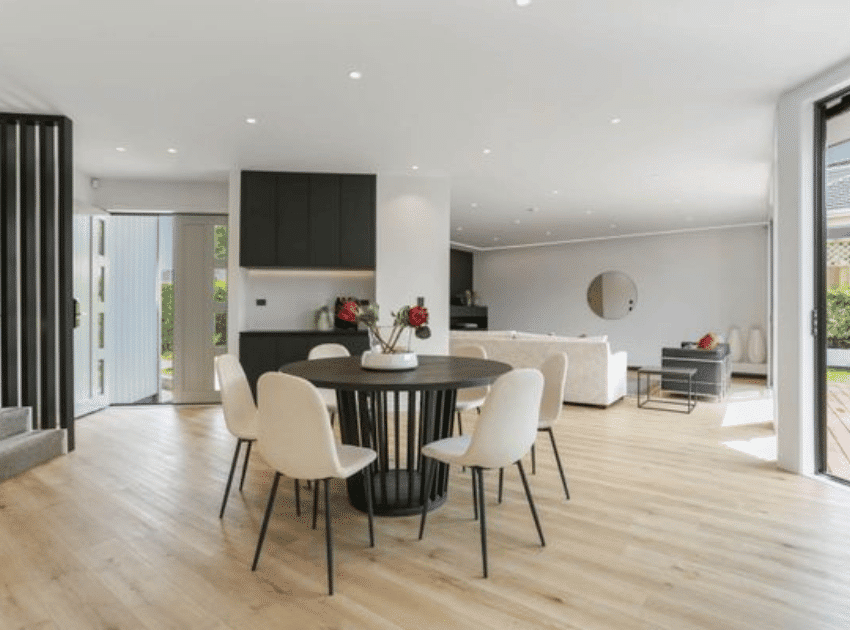
A Healthy Home Again
With the framing dry and the envelope sealed, the interior was reworked into an open-plan kitchen, dining, and living area — turning a leaky, unsellable house into a home the family love living in.
View the full case study →Five signs your Auckland home needs recladding.
Most Auckland weathertightness failures show themselves quietly — well before the structural damage becomes obvious. Catch these signs early and your reclad scope (and budget) will be much smaller.
1.
Staining or bubbling paint at junctions — windows, parapets, deck handrails. The first visible sign that water is sitting somewhere it shouldn’t.
2.
Soft spots in cladding — push gently around windows or sills. Spongy plaster or weatherboard means the framing behind is wet.
3.
Visible cracks in monolithic plaster wider than 1mm — especially at corners and joinery. Cracks are entry points for water.
4.
Musty smell or damp interior walls — water has already migrated through the framing and into the gib lining. Investigation needed.
5.
Aging 1990s–2000s plaster home — even without visible damage, monolithic plaster from this era has a known weathertightness failure rate. Get it inspected.
Free Check
Concerned about your home? We do free Auckland-wide weathertightness inspections — moisture readings, visual check, and a written report.
Know the reclad number before you bid.
Buying a plaster home or planning a reclad on one you own? The Recladding Cost Plan ($99 incl GST) is built from the documents you already have — the council property file, the building report, the listing. Twelve pages in five working days: the number, the range either side of it, and the one survey worth paying for before you go unconditional. Credited in full against the reclad if AVR builds it.
Order a Recladding Cost Plan — $99 incl GST Compare all cost planning reports
Order of cost, ±15% · not a fixed price · desktop, no site visit needed
Auckland recladding across every suburb.
Based in Newmarket, we reclad homes right across the Auckland region — leaky plaster homes in the Eastern Bays, weatherboard villas in central suburbs, fibre cement reclads on the North Shore and West Auckland.
Eastern Suburbs
St Heliers · Mission Bay · Howick · Botany · Eastern Bays · Bucklands Beach · Pakuranga
North Shore
Takapuna · Devonport · Milford · Birkenhead · Northcote · Albany · Forrest Hill
West Auckland
Titirangi · New Lynn · Glen Eden · Blockhouse Bay · Mt Albert · Avondale · Henderson
Recladding questions.
The questions Auckland homeowners ask us most often before committing to a recladding project.
How much does recladding cost in Auckland?
Recladding an Auckland home typically costs between $80,000 and $300,000, depending on house size, cladding system, and how much framing damage sits behind the cladding. A 150m² single-storey home in modern fibre cement averages $100,000–$150,000. A 250m² two-storey home in monolithic plaster replacement can run $180,000–$280,000. Extensive treated framing replacement adds 15–30% on top. We give a fixed price after the weathertightness investigation, not a rough estimate.
How do I know if my home needs recladding?
Recladding is needed when the existing cladding has failed to keep water out, when the framing behind has rotted, or when the cladding has reached the end of its serviceable life. Common signs include staining or bubbled paint at window junctions, soft spots in the wall, cracks wider than 1mm in monolithic plaster, musty smells inside, and visible decay on weatherboards. If your home is a 1990s or 2000s monolithic plaster build, it should be inspected even without visible damage — many homes from that era have known weathertightness failure rates.
Do I need building consent for recladding?
Yes, recladding always requires building consent in Auckland. Auckland Council requires consent because recladding affects the building envelope, weathertightness, and structural performance of the home. We prepare and lodge the consent application including all required documentation — moisture reports, framing inspection records, cladding system specifications, LBP records, and producer statements. Consent typically takes 20 working days for residential alterations.
What is the best cladding to use for an Auckland recladding project?
The best cladding depends on your home’s age, style, and budget. The three most common Auckland reclad choices in 2026 are fibre cement sheet systems like James Hardie Linea or Stria (popular for modern homes, low maintenance), cedar or composite weatherboard (best for villas, bungalows, and heritage-style homes), and modern plaster systems on a drained cavity (when you want to keep the original plaster look without the leaky-home risk). All three can deliver a 50+ year service life when installed correctly with cavity systems and treated framing.
How long does a recladding project take?
A typical Auckland recladding project takes 4 to 6 months total — including 2 to 4 weeks for investigation and design, 6 to 10 weeks for consent and preparation, and 8 to 16 weeks on site for the actual recladding work. Larger homes, two-storey homes, and projects with extensive framing replacement sit at the longer end. Weather can extend timelines in winter.
What happens to the framing behind the old cladding?
When we strip the old cladding, we expose every section of the framing for inspection. Any timber framing that is wet, rotted, or shows signs of decay is replaced with H1.2 treated timber to current building code. We include a treated framing replacement allowance in the fixed price quote so you don’t get hit with a variation if more framing needs replacing than expected. We document every replaced framing member for the council inspection and your Code of Compliance Certificate.
Can I live in my home during a recladding project?
Yes, in most cases you can live in your home during recladding. The work happens on the exterior, so the interior remains habitable. You will have some disruption from scaffolding around the home, noise during the strip-out and refixing days, and occasional power-off periods if joinery needs to be removed and refitted. We discuss this upfront in the design phase so you know what to expect.
Is recladding covered by the Master Builder 10-Year Guarantee?
Yes, every recladding project we deliver over $30,000 is covered by the Registered Master Builders 10-Year Guarantee. This is a third-party guarantee underwritten by the Master Builders Association, independent of Add Value Renovations. It covers two years of workmanship and materials, ten years of structural integrity, and ten years of weathertightness — which is the cover that matters most on a recladding project.
Does recladding add value to my Auckland home?
Yes, recladding typically returns 80 to 110% of its cost in added market value at sale — and often more in Auckland markets like Remuera, Ponsonby, and Devonport where weathertight, modernised exteriors command a strong premium. A home that has been professionally recladded with documented consent records sells faster and at a higher price than a comparable home with original failed cladding still in place. It also removes the major buyer-side risk that scares off renovators and investors.
Do you do leaky home repairs as well as full recladding?
Yes, we handle both targeted leaky-home repairs and full recladding. For minor weathertightness failures — a leaking window junction, a single rotted board — we can do localised remedial work. For systemic failures across multiple junctions or whole walls, full recladding is usually more cost-effective in the long run than chasing individual fixes. We tell you straight which approach is right for your home after the investigation.
Will recladding restore my home’s Code of Compliance Certificate?
Yes. A correctly consented and inspected recladding project will result in a new Code of Compliance Certificate (CCC) being issued by Auckland Council once all inspections pass. This is critical — many Auckland homes built between 1994 and 2004 with direct-fix monolithic plaster have either no CCC or a CCC that is effectively unsellable to most buyers and lenders. Recladding under a Building Consent restores the weathertightness performance, brings the home up to current Building Code (including E2/AS1 cavity systems), and gives you a fresh CCC that satisfies banks, insurers, and future buyers. We document every framing inspection, cladding system specification, and producer statement required for Council sign-off.
Is there government funding for leaky home repairs in NZ?
The original Financial Assistance Package (FAP) for leaky home claims under the Weathertight Homes Resolution Service closed for new claims in 2016 and has now largely wound up. As of 2026, most Auckland recladding projects are privately funded by the homeowner, often through a renovation top-up mortgage, equity release, or insurance claim if the original builder or developer is still trading. We can introduce you to lenders and brokers who specialise in renovation finance for weathertightness work, and we structure our fixed-price contract so you can present a clear, bank-ready cost figure when applying. Existing legacy WHRS claimants should check directly with the Ministry of Business, Innovation and Employment for any remaining entitlements.




Let’s get your home weathertight again.
Book a free weathertightness check and 30-minute call with our team. We’ll inspect your cladding, give you a written report, and talk you through what a recladding project would actually involve — no obligation, no sales pressure.
Auckland-wide · No obligation · Master Builder member since 2014