New Zealand · 2026 Edition
Bad Building Report? What to Do Before Your Condition Date (NZ 2026)

Do not decide on the report alone: sort the items into urgent, soon and cosmetic, put a price range on each, then talk to your lawyer about asking for a lower price, more time or cancelling under your building report condition. A report tells you what is wrong. It does not tell you what it costs, and the cost is what you need.
The building report has come back with more in it than you hoped, and the clock is running. This is a builder’s plan for the days you have left. We are not lawyers, so where the next step is a legal one we say so and point you to your lawyer or to settled.govt.nz, the government’s home-buying guide.
FREE DOWNLOAD
The Complete Renovation Checklist
50 things to confirm before, during and after your renovation.
Get Free Guide →
The short answer
A long report is not the same as a bad house. What matters is which items are serious and what they cost to fix. Work through it in this order.
| When | What you do | Who helps |
|---|---|---|
| First hour | Find your condition date. Read the summary, the significant defects and the list of what was not inspected. | Your lawyer, for the date |
| Day 1 | Sort every item into urgent, soon or cosmetic. Ring the inspector with your questions. | The inspector |
| Day 1–2 | Put a price range on the list. | A builder |
| Day 2–3 | If the numbers are big or the report is unclear, walk through the house with a builder. | A builder, booked through the agent |
| Before the date | Choose: negotiate, ask for more time, or cancel. | Your lawyer, then the agent |
The days are a guide to the order, not a promise that everything fits your window. If it does not fit, ask your lawyer about more time on day 1, not on the last day.
The first hour: what to read first
Start with your agreement, not the report. Your sale and purchase agreement sets out how many working days you have to fulfil each condition. Settled.govt.nz explains this on its page about the sale and purchase agreement when buying. Ask your lawyer to confirm the exact date your building report condition runs out.
Then read the report in this order:
- The summary. The inspector’s overall view of the house.
- Significant defects and urgent items. Settled.govt.nz says an accredited inspector’s report should identify any defects and what urgent and long-term maintenance is needed.
- Anything about water. Moisture readings, leaks, cladding, roof, gutters, showers. Water is what turns a small repair into a large one.
- What was not inspected. Look for the areas the inspector could not get to or could not see, such as a roof space, a subfloor or behind fitted furniture.
Check who ordered the report. If the agent or the vendor gave it to you, settled.govt.nz warns that you are not likely to be protected if you rely on a report you did not commission. See its page on learning about the property.
Day 1: sort the list and ask the inspector
Put every item in the report into one of three groups. It is the same sorting we use when we price a report.
| Group | What belongs here | What it means for you |
|---|---|---|
| Urgent | Water getting in, anything unsafe, anything getting worse while it waits | This is the money that decides the deal. Price it first. |
| Soon | Things near the end of their life that still work today | A cost in your first few years of owning the house. Budget for it. |
| Cosmetic | Worn finishes, marks, things you would change anyway | Rarely a reason to renegotiate. Leave it out of the argument. |
Then ring the inspector, who has seen the house, and ask plainly:
- Which three items would worry you most if you were buying this house?
- Is this item a sign of something bigger, or is it what it looks like?
- What could you not see, and would you recommend a specialist look at it?
Write the answers next to the items. The inspector’s job is to find the problems. Putting a cost on them is the next step.
Day 1–2: put a price on it
There are two ways to get a number without anyone visiting the house.
| Instant Estimate | Building Report Price Check | |
|---|---|---|
| Cost | Free | $199 Standard · $299 Next working day |
| Time | Online, in minutes | 2 NZ working days, or the next working day |
| What you get | One ballpark range for a whole project, such as a bathroom or a kitchen | Every item in your report priced as a low–high range |
| Best for | A first feel for one big item tonight | The full list, ready to take to your lawyer and the agent |
Our service prices include GST. The Instant Estimate is the free option. It cannot read your report and it does not price the items one by one.
The Building Report Price Check does. You send us the report and we price every item as a low–high range including GST, mark each one urgent, soon or cosmetic, and name the trade it needs. You also get a note of what the report could not see and one summary page written for the negotiation. It is priced by a Master Builder with a quantity surveyor (the person who measures and costs building work), from our own Auckland jobs.
We take one next-working-day report per NZ day, so that option is subject to availability. On either option the clock starts when we have received your report and confirmed it.
What a Price Check is not
It is a desktop study, done from your report. It is not a quote and it is not a building inspection. We do not do building inspections, and we are not an independent valuer or an independent quantity surveyor.
The fee is not lost if you buy the house and we do the work: “If AVR does the work within 12 months, your report fee comes off the contract. It counts only against a signed contract and is never refunded as cash.”
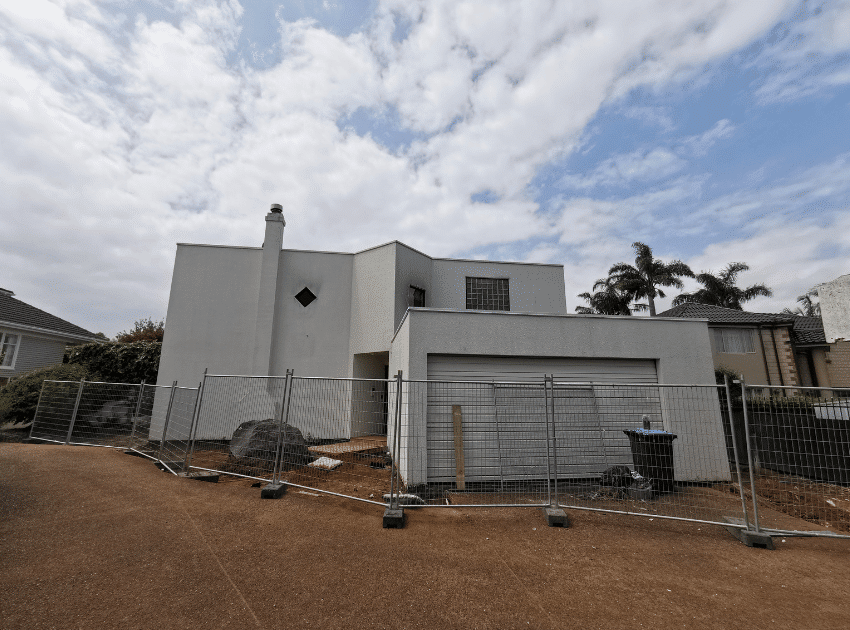
If the report mentions plaster cladding or moisture in the walls, read our builder’s checklist for buying a plaster home. Cladding is the item that can change the whole decision. Our recladding cost guide explains what drives the price; our Instant Estimate puts a full reclad of most Auckland homes at about $166,000 to $466,000 including GST, and more where a damage report shows widespread framing decay.
Day 2–3: see it with a builder
Not every buyer needs this step. It is worth it when the priced list is large or the report is vague about something expensive.
Our pre-purchase site visit is $449 including GST, less what you have already paid for any AVR report on the same house, up to $199. If you paid $199 for a Price Check, that makes it $250. You get up to one hour on site with a builder who has your report in hand, and a written price update within 2 working days. There is no travel charge anywhere in Auckland. The visit is booked through the agent.
Count the days against your condition date before you book. If they do not fit, talk to your lawyer about more time first.
A builder’s visit is still not an invasive test. If the worry is a leaking plaster home, the right next step may be a specialist weathertightness investigation, which our guide to repairing, recladding or selling a plaster home explains.
Using the number: three choices
Settled.govt.nz says that, depending on what an inspection finds, you may be able to use the report to negotiate with the vendor over price or repairs. It also says that if the report is not satisfactory to you, you may be able to withdraw your offer on those grounds. What you can do, and how, depends on the wording of your own agreement. That is your lawyer’s call.
| Choice | When it fits | Who you talk to | What to bring |
|---|---|---|---|
| Negotiate | The urgent items add up to real money but you still want the house | Your lawyer first, then the agent, who takes it to the vendor | The summary page with the urgent items and their price ranges |
| Ask for more time | Something expensive is still unknown and a specialist or a site visit would answer it | Your lawyer, who asks the vendor’s side | What you need to check and how long it will take |
| Walk away | The cost is more than you can carry, or the unknowns are too large to price | Your lawyer, before the condition date | The report itself |
Settled.govt.nz also says the vendor may ask to see a copy of the report, and that if you use its findings to get out of the contract you must give the seller a copy. The vendor may not agree to what you ask. That is why a priced list helps: a range and a trade beside each item is harder to wave away than “the report was bad”.
Start with the urgent group, leave the cosmetic items out, and allow something for what nobody could see. Our article on why renovation budgets blow out explains where the hidden costs in an older house usually come from.
What not to do
- Do not rely on a guess. A friend’s “that’s a couple of grand” is not a number you can negotiate with or borrow against.
- Do not confirm or waive the condition to keep the deal moving. Once the agreement is unconditional you must complete the purchase. Speak to your lawyer before you give anything up.
- Do not let the date arrive without a decision. What happens when a condition date passes depends on your agreement. Ask your lawyer on day 1.
- Do not negotiate on every line. A few priced urgent items make a stronger case than a long list of small ones.
When the number is good news
Sometimes the priced list is smaller than the report made it feel. A sound older house can still produce a long report. If the urgent group is short and the rest is ordinary maintenance, the report has done its job.
Then you can go to your lawyer with a clear head and keep the priced list as your maintenance plan. If you are already planning a new kitchen, a bathroom or an extension once you own the house, our cost planning reports cover those.

Bad building report FAQs
You have the number of working days written into your sale and purchase agreement for that condition. It differs from one agreement to the next. Ask your lawyer to confirm the exact date today, and whether more time is possible.
You can ask. Settled.govt.nz says you may be able to use a report to help you negotiate with the vendor over price or repairs, but the vendor does not have to agree. Go through your lawyer, and bring priced items.
Possibly, depending on the wording of your condition. Settled.govt.nz says that if the report is not satisfactory to you, you may be able to withdraw on those grounds, and that you must give the seller a copy of the report if you do. Your lawyer must handle this, and before the condition date.
Usually not a second general inspection. If the first report raises a specific worry, a specialist for that one thing is more useful, such as an electrician for old wiring, an engineer for structure or a weathertightness investigation for plaster cladding. Ask your inspector which they would recommend.
$299 including GST, against $199 for the standard 2 working days. We take one next-working-day report per NZ day, so it is subject to availability, and the clock starts when your report is received and confirmed.
They may offer to, and it is one of the things you can negotiate. Think about who would do the work and how you would check it. Ask your lawyer how it should be written into the agreement.
Get one first. Settled.govt.nz recommends an accredited property inspector and a report that meets the inspection standard NZS 4306:2005. We do not do building inspections. While you wait, the free Instant Estimate gives you a ballpark for any renovation you already know the house needs.
Report in hand and a date coming up?
Every item in your building report priced as a low–high range, marked urgent, soon or cosmetic. Two working days, or next working day if you are short on time.
Order a Building Report Price Check · $199 →