Auckland · Renovation guide · 2026
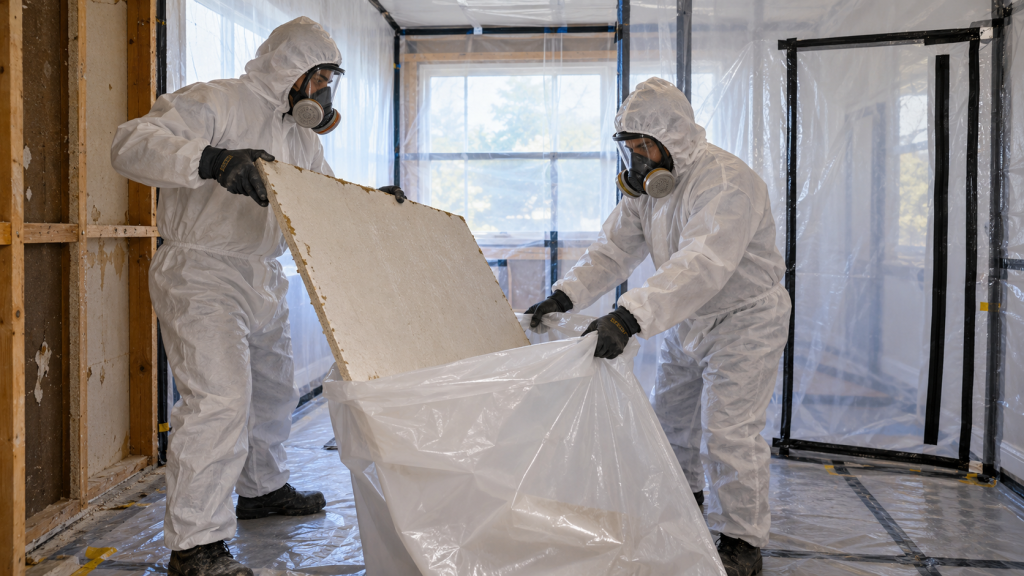
Cover image: AI-generated illustration of asbestos removal during renovation. It is not an actual worksite or a guide to removal procedures.

Found asbestos in your home? It doesn’t have to stop your renovation. The key is knowing where to look, when it needs to be removed and how to plan the work safely.
FREE DOWNLOAD
The Complete Renovation Checklist
50 things to confirm before, during and after your renovation.
Get Free Guide →You’ve chosen your bathroom tiles and booked the builder. Then someone mentions that the old vinyl might contain asbestos. What happens next? This guide takes you through the process in plain English.
Know where to look
Where could asbestos be hiding?
Homes built before 1 January 2000 may contain asbestos in materials used for roofing, cladding, wet areas and insulation. You can’t confirm asbestos by looking at a photograph; suspect materials need appropriate assessment and laboratory testing.
Older fibre-cement sheets under the eaves.
Old sheet cladding, backing and some coatings.
Older vinyl, backing or adhesive.
Older corrugated cement sheets.
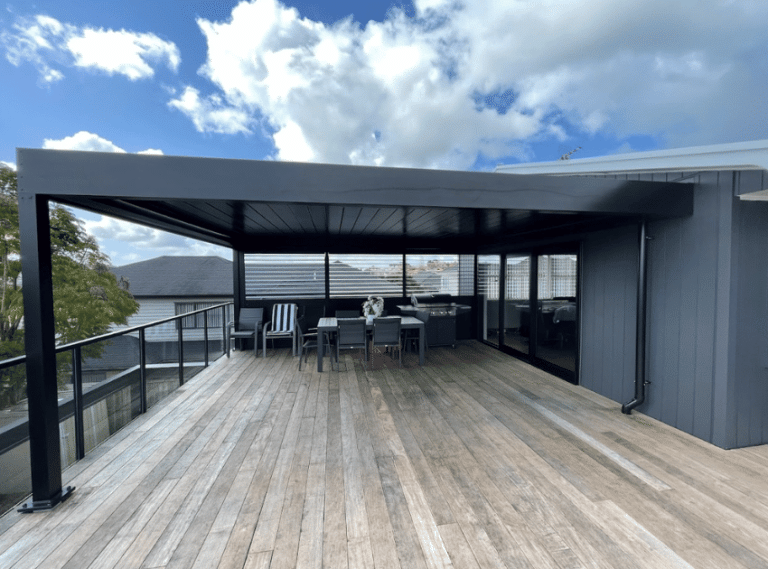
AI-generated illustrations of possible locations; photos cannot identify asbestos. Other locations include roofs, textured ceilings, interior wall linings, fireplace surrounds and pipe insulation. See WorkSafe’s location guide.
First, don’t panic
Is it dangerous if left in place?
Intact material in good condition that will not be disturbed can often remain in place and be managed. The concern is fibres released when it is damaged, cut, drilled, sanded or broken. Breathing asbestos fibres can cause serious disease, often many years later.
If you suspect asbestos has been disturbed, stop work, keep people away and ask an asbestos professional for advice. Don’t sweep debris or use an ordinary vacuum. If you are concerned about exposure, speak with your GP.
Before the builder starts
Do I need an asbestos survey?
For relevant refurbishment or demolition in a pre-2000 structure, or where asbestos is identified or likely, WorkSafe’s view is that a competent person should carry out a refurbishment or demolition survey before work starts. The survey should cover the areas the proposed work will disturb.
A roof test only tells you about the material sampled. It does not clear the soffits, vinyl floor or wall linings. Ask your surveyor to explain areas they could not access and whether a staged inspection will be needed.
Consider the options
Does asbestos always have to be removed?
No. Depending on its condition, location and the proposed work, an asbestos professional may advise leaving it undisturbed, sealing it, enclosing it or removing it. Where renovation or demolition will disturb asbestos, the applicable rules require it to be identified and, so far as reasonably practicable, removed before the relevant work starts.
Could a plywood barrier be used under the house?
In some situations, a properly designed barrier may help protect intact material from accidental damage. For example, a specialist might consider an enclosure beneath a floor where asbestos-containing material will remain undisturbed. Plywood is not automatically an appropriate or complete asbestos enclosure. The design depends on the material, condition, access, moisture and whether fibres can be contained.
Never simply screw, nail, cut or drill through suspect material to install a cover. Ask a competent asbestos professional and your builder to assess the site, plan safe installation and confirm the applicable rules. Any asbestos left in place must be recorded, communicated to future trades and checked and maintained as appropriate. Covering it does not remove the hazard.
Who can do the work?
Licences, exceptions and WorkSafe
Class A: any amount of friable asbestos requires a Class A licensed removalist. Class A licence holders can also remove non-friable material.
Class B: a Class B licence covers non-friable asbestos, such as many intact cement sheets. Condition and the removal method matter; some vinyl systems can require Class A controls.
Small-job exception: up to and including 10 m² of non-friable asbestos may be removed without a removal licence, subject to competency and safe-work requirements. The limit is cumulative across the entire site project; splitting a larger job does not avoid it. Any amount of friable asbestos requires Class A.
WorkSafe notification: the licensed removalist normally gives written notice at least five days before licensed removal starts. Limited emergencies have a separate process. This notification is not a building consent or WorkSafe approval of your renovation.
Check WorkSafe licence requirements → · Notification requirements →
From survey to handover
How asbestos removal works
Survey the renovation area
A competent surveyor reviews the planned work, identifies suspect materials and arranges testing where needed.
Choose a safe approach
Confirm what must be removed, what may remain, and the appropriate licence and controls. Request an itemised quote.
Plan and notify
For licensed work, the removalist prepares a site-specific removal control plan and notifies WorkSafe before starting.
Isolate and remove
The team restricts access, sets up appropriate containment, uses protective equipment and arranges licensed waste disposal. Class A work requires air monitoring through clearance.
Independent clearance
After licensed removal, an independent qualified person inspects the area and issues a clearance certificate when requirements are met. Class A requires an independent licensed asbestos assessor; Class B may use an independent competent person or licensed assessor.
Continue the renovation
Once the required clearance has been issued, the builder and other trades can return. Keep the survey, lab results and clearance records for future work.
Plan your budget
How much does asbestos removal cost?
Small jobs have setup costs, while access, the material’s condition and the controls required can change the price considerably. The figures below are indicative NZ market allowances, not quotes. Confirm GST and inclusions with the provider.
| Example | Indicative allowance | What affects it |
|---|---|---|
| Test sample | $80–$180 each | Site visit and sampling may be extra |
| Renovation survey | $400–$1,000+ | Access and number of samples |
| Bathroom vinyl, one room | $1,500–$4,000 | Backing and containment requirements |
| Kitchen vinyl, one room | $1,500–$4,000+ | Layers, area and removal method |
| Soffits, small single-level house | $1,800–$5,000 | Length, access and scaffold |
| Exterior cement cladding | About $50–$120/m² | Minimum charges and difficult access |
| Fence, 10–30 m | $1,500–$4,000 | Height, access and disposal |
| Roof, example about 200 m² | $5,000–$15,000 | Pitch, height and access |
Prices are indicative only and draw on NZ removal price bands, an Auckland cost guide and NZ market ranges. Provider assumptions vary. Confirm inclusions and GST.
Example: a 100 m² single-level house
If the home has an assumed 100 m² of exterior asbestos cement cladding, a broad removal allowance might be $6,000–$12,000. The house’s floor area is not the cladding area: measure the walls. Survey, scaffold, independent clearance, replacement cladding, building work and GST may be extra. Friable materials and complex sites require a separate assessment.
Your questions answered
Asbestos renovation FAQs
Can I stay in my home during removal?
Sometimes. It depends on the location, material and containment. Ask the removalist which areas are restricted, whether you need to leave and when you can return.
Is a clearance certificate for the whole house?
No. It applies to the specified removal area and work. Other asbestos material may remain elsewhere in the home.
Can I cover an old asbestos floor?
Sometimes an appropriate floor covering or enclosure is possible, but the material and proposed work need specialist assessment. Avoid disturbing it and record what remains for future trades.
Can the surveyor also do the clearance?
A suitably qualified professional may provide both services, but the clearance person must meet the applicable independence and qualification requirements for the removal class.
What if asbestos is found after work starts?
Stop the affected work, keep people away and arrange assessment. The programme may need to change to allow for testing, removal and clearance.
Do I need a building consent?
WorkSafe asbestos requirements and building consent are separate. The wider renovation may need consent depending on the scope; check with your designer, builder or council.
Will insurance cover removal?
It depends on the policy and why the work is needed. Check with your insurer before committing to costs.