Auckland · 2026 Edition
Adding a Second Storey to Your Auckland Home: 2026 Costs, Consents & What to Expect

If you love your Auckland neighbourhood but your house has run out of room, adding a second storey is often the smartest path forward. You keep your garden, your section coverage, and your address — and you get the floor area you actually need.
- When a second storey makes sense (and when it doesn't)
- What does a second storey cost in Auckland?
- The structural reality check
- Auckland Council consent: what to expect
- Heritage and character zones
- Living in your home while it's being built
- Realistic project timeline
- Six things clients get wrong
- How to start planning
- The 50-point checklist every Auckland family should run before they sign
When a second storey makes sense (and when it doesn’t)
A second storey is the right answer when:
- Your section is small or already heavily covered
- You want to preserve outdoor space and garden
- You need significant floor area (40m² or more)
- Resale value in your suburb supports the investment
- Your existing foundations and structure can carry the load
A ground-floor extension is usually better when:
- You’re planning for retirement and want single-level living
- Your existing foundations weren’t designed for a second floor (some 1960s–80s homes)
- The space you need is smaller (under 30m²)
- Your section has room and the coverage allowance
The honest comparison: a second storey usually costs 10–25% more than the equivalent ground-floor build of the same size, but for many Auckland sites it’s the only realistic option because section coverage is already maxed out.
What does a second storey cost in Auckland?
Second storey extension costs in Auckland for 2026 typically fall into these brackets:
Partial second storey (40–70m²)
$380,000 – $620,000. Usually 2–3 bedrooms plus a bathroom upstairs. Includes structural strengthening of the existing house, new framing, weathertight envelope, full fit-out, stair installation, electrical, and plumbing.
Full second storey (80–120m²)
$680,000 – $980,000. Effectively doubles your floor area. Usually involves rebuilding the entire roof structure. The economies of scale work in your favour at this size — cost per square metre often drops compared to a partial addition.
Premium second storey with architectural design (any size)
Add 20–40% to the above ranges. High-end finishes, complex architectural detailing, custom joinery, and feature elements like cantilevered sections or large structural glazing push the per-square-metre rate up significantly.
Cost drivers that move you toward the top of each range: hillside sites with restricted access, character home matching, complex roof geometries, and adding upstairs bathrooms (the plumbing run from ground-floor stack adds cost).
The structural reality check
Before you commit to a second storey, an engineer needs to confirm your existing house can carry one. This costs $1,500–$3,500 and saves you from finding out the hard way mid-build. What they’re checking:
- Foundations — most Auckland homes have foundations sized for the existing single-storey load. A second storey adds significant weight; foundations often need underpinning or strengthening.
- Existing wall framing — the bottom-storey walls become load-bearing for the new floor above. Older homes often need wall strengthening or new structural elements added.
- Roof structure — usually rebuilt entirely. Don’t expect to keep the existing roof on a substantial second storey project.
- Floor structure — the new upstairs floor needs to be properly engineered, especially over open ground-floor spans.
One pattern we see often in Auckland: 1970s–80s timber-frame homes with concrete slab foundations are usually good candidates for a second storey because they were over-engineered. Older bungalows on piles often need foundation work but the timber frame above is straightforward. Newer (2000s) homes can be unpredictable — they were built lighter and tighter to budget.
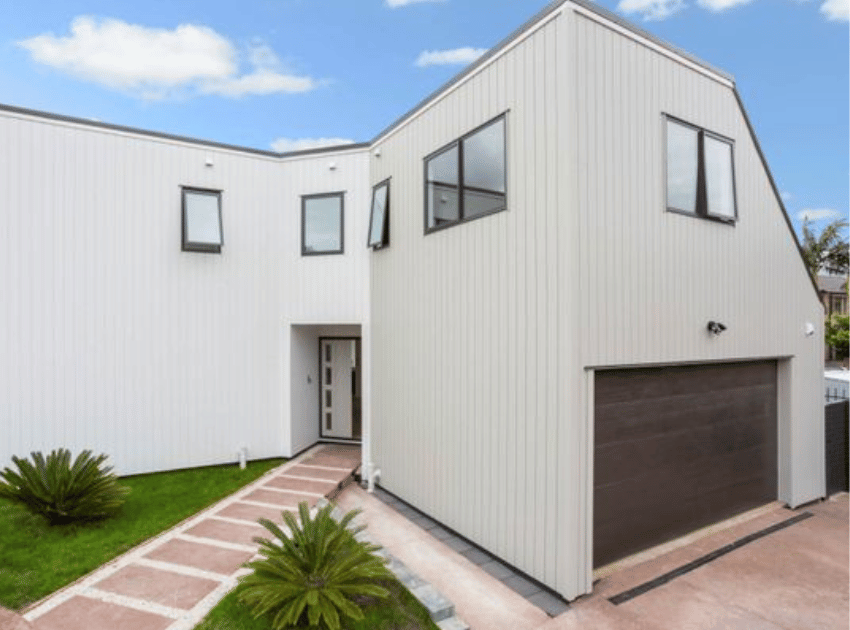
Auckland Council consent: what to expect
Every second storey extension needs building consent. Many also need resource consent. Here’s the difference:
Building consent confirms the build meets the NZ Building Code. Always required. Auckland Council processing time: 30–45 working days after lodgement.
Resource consent is needed if you exceed the permitted rules in your zone — height, height-to-boundary, site coverage, or recession plane. A second storey almost always triggers at least one of these. Auckland Council processing time: 20 working days for a non-notified resource consent, longer if neighbours need to be consulted.
For a second storey extension in Auckland, budget 3–5 months from finalised design to consents granted. The realistic total from “let’s start designing” to “consent in hand”: 6–9 months before construction can begin.
Heritage and character zones
If you’re in a heritage overlay or character residential zone — Ponsonby, Grey Lynn, Mt Eden, Kingsland, Devonport, Parnell — second storey extensions are more complex. The council typically requires:
- Design that respects the existing character of your home and street
- Materials matching original (weatherboard, traditional joinery, sympathetic roof pitch)
- Often a recessed second storey that doesn’t dominate the streetscape
- Heritage assessment as part of the consent application
This adds 4–8 weeks to the consent process and 5–15% to design fees. Worth doing properly — character home values in these zones depend heavily on sympathetic renovation work.
Living in your home while it’s being built
This is the question every client asks: can we stay in the house while you build upstairs?
Honest answer: partially, but most clients eventually choose to move out for the noisy phase. Here’s why:
The first 4–6 weeks of a second storey project involve removing the existing roof, adding new structural posts and beams to support the upstairs floor, and getting the new floor framed and decked. During this period your home is exposed to weather (temporary roofing protects against most of it but not all), and there’s heavy demolition noise.
Most clients we work with move out for 6–12 weeks during this phase. Once the upstairs is weathertight and the construction has moved indoors, you can usually move back in for the second half of the build with reasonable comfort.
Budget $20,000–$60,000 for short-term rental accommodation depending on your needs and duration. Some clients stay with family. A few clients have stayed in the house the whole way through — it’s possible, but it’s hard on family life and we don’t recommend it for projects over 4 months.
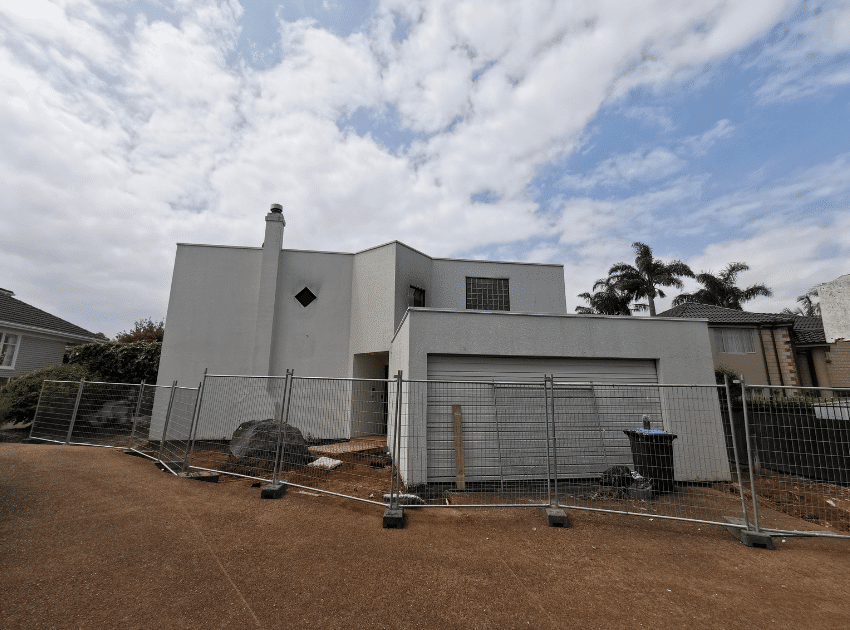
Realistic project timeline
For a typical second storey extension in Auckland:
- Design and consent: 4–6 months
- Demolition and weathertight envelope: 8–10 weeks on site
- Interior fit-out: 10–14 weeks on site
- Final finishing and handover: 2–3 weeks
Total: 10–14 months from first conversation to moving into the completed home.
Six things clients get wrong
1. Underestimating the stair footprint. A compliant staircase takes 4–6m² of your ground-floor area, plus the landing space. Plan its location before anything else — getting it right reshapes the whole project.
2. Skipping the pre-purchase structural assessment. If you’re buying a house with the intention of adding a second storey, get an engineer to review the existing structure before you go unconditional. We’ve seen clients commit to a property only to find out a second storey would require complete foundation replacement.
3. Ignoring recession plane rules. Auckland’s recession plane rules effectively limit how close to your boundary your second storey can be. Most projects need design adjustments to comply, and trying to push the limits guarantees a notified resource consent (and neighbour involvement).
4. Cheap windows on the second storey. Upstairs windows take the most weather, sun, and wind. Use quality double-glazed units with good frame ratings. The cost difference is significant; the long-term weathertightness difference is more significant.
5. Ignoring noise transmission. If you put bedrooms upstairs above living areas downstairs, every footstep, dropped object, and pulled drawer will be heard below. Acoustic insulation in the new floor structure is essential and gets missed when budgets are tight.
6. Choosing the cheapest builder. Second storey extensions are complex multi-disciplinary projects. Structural work, weathertight detailing, scaffolding management, and coordinating trades across two levels takes a different skill set from a kitchen reno. The cheapest quote almost always means cost overruns and weathertight risk later. Vet your builder properly.
How to start planning
Before you talk to a designer, get these four things lined up:
- A realistic budget with a 15–20% contingency factored in
- An understanding of your zone rules — Auckland Council’s GIS viewer shows your zone overlay, recession plane, and site coverage allowance
- A wishlist with priorities — what’s non-negotiable, what’s nice-to-have, what’s budget-permitting
- An engineer-led structural assessment of your existing house — non-negotiable for second storey projects
If a second storey is overkill and you really just need a private adult retreat, you might find our guide on master suite renovations more useful — the budget and complexity are quite different.
The 50-point checklist every Auckland family should run before they sign
50 things to confirm before, during and after your renovation — covering scope, contracts, consents, site protection, payments, snag lists and handover. The exact pre-flight check we use on every AVR project.
Plan your second-storey addition
Three ways to move forward — an instant estimate, a free on-site consultation, or our renovation ebook.
Get an instant estimate → Book a free consultation → Download the 7 Things ebook →