

Most Auckland homeowners kick off a renovation with the same dream:
a clear plan, a fair price, and no surprises.
But here’s the bit a lot of people only discover once they’re knee-deep in gib dust and invoices:
The pricing model you choose at the very start can completely shape your experience — for better or worse.
And if you choose the wrong one?
Your “dream reno” can turn into a slow, stressful, budget-blowing headache.
Let’s break it down properly, in plain English.
The Real Budget Risk: Charge-Up (Cost-Plus)
Charge-up sounds fair.
You pay for the time and materials as they’re used.
If things change, you just “adjust the bill.” Easy, right?
Yeah… not usually.
Here’s what actually tends to happen:
- The scope creeps.
A tweak here, an upgrade there, “Oh, we may as well fix that while we’re here”… - Labour blows out.
Hidden issues, weather, tradies overlapping — all of it adds hours. - You carry all the risk.
If the builder underestimates, you’re the one footing the bill. - It’s almost impossible to pull back once you start.
By the time you see the spend climbing, you’re already committed.
We hear this all the time from homeowners:
“We honestly didn’t realise how fast the numbers could climb.”
And by then, it’s too late.
The Safer Option: Fixed-Price
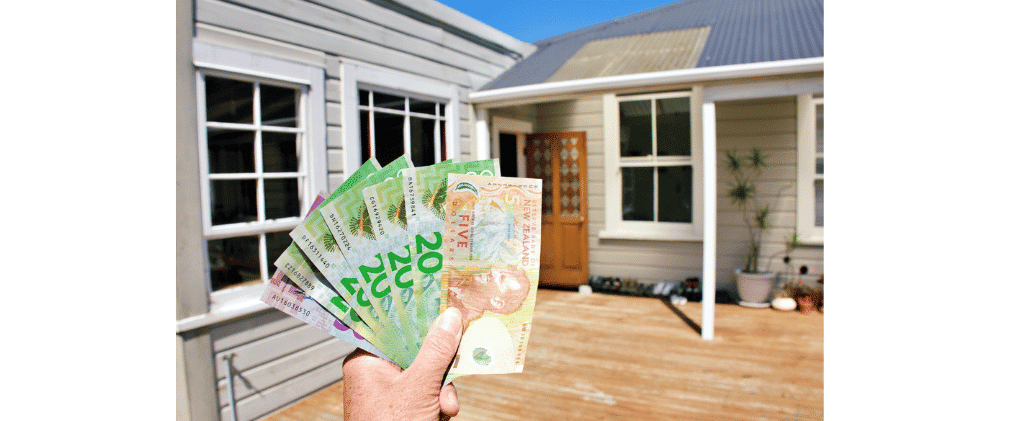
A fixed-price contract is the opposite.
Before anyone picks up a hammer, everything is scoped, priced, and agreed.
The number is the number.
Why it works so well in Auckland:
- You know the total cost before you begin.
- You get a clearly defined scope — no guesswork.
- Planning is more accurate and delays are reduced.
- Risk is shared, not dumped entirely on you.
It’s predictable. It’s controlled.
And it lets you enjoy your renovation, not stress about every invoice.
So… Which Should You Choose?
Charge-up can work if:
- The job is tiny
- You can’t define the scope (e.g., emergency repairs)
- You’re genuinely comfortable carrying all risk
But for kitchens, bathrooms, extensions, and full home renos?
Fixed-price is almost always the safer, smarter choice.
Quick Kiwi Checklist for a Solid Fixed-Price Build

Before you sign anything:
✔️ Is the scope clearly defined?
✔️ Do you have a full list of materials, fittings, finishes?
✔️ Did the builder give a full breakdown — not just a lump sum?
✔️ Have you seen a timeline and build sequence?
✔️ Do you understand what’s not included?
✔️ Have you set aside a sensible contingency?
✔️ Do you know exactly how variations will be handled?
If you can confidently tick these off, you’re in great shape.
Final Thought
Renovations in Auckland aren’t cheap — and they’re not getting any cheaper.
But the stress, the budget blowouts, the sleepless nights… those can be avoided.
Start with the right pricing model.
Ask the awkward questions.
Get clarity before you sign anything.
Your future self (and your bank account) will thank you for it.
FAQ
What’s the difference between fixed-price and charge-up in plain English?
A fixed-price contract gives you a set cost upfront.
A charge-up contract bills you for time and materials as the job progresses.
One is predictable. The other moves around — sometimes a little, sometimes a lot.Are fixed-price contracts always more expensive?
Not necessarily.
Good builders spend more time scoping fixed-price projects, so the number may look higher at first glance — but it also stays put.
Charge-up often starts cheaper and ends… well… not cheaper.Why do so many renovations blow their budgets?
Most blowouts come from:
unclear scopes
hidden issues uncovered during demo
design changes
poor planning
hourly labour drifting
Fixed-price agreements minimise most of these risks because everything is nailed down early.When does charge-up actually make sense?
Charge-up works well for:
small jobs
emergency repairs
work where no one can define the scope upfront
homeowners who are genuinely comfortable with financial risk
If none of those sound like you, fixed-price is usually safer.What if the builder “forgot” to include something in a fixed-price quote?
In a proper fixed-price agreement, that’s on the builder, not you.
This is why detailed scoping matters.
If it wasn’t excluded and you didn’t change the plan, the price shouldn’t change.What are variations and how do they work?
A variation is any change you choose to make during the build — different tiles, extra lighting, moving a wall, etc.
A good contract will show:
how variations are priced
who approves them
how they affect the timeline
You should never see surprise variation charges.Why do builders sometimes push charge-up?
Because it protects them from risk.
Materials, delays, labour — everything flows straight through to the homeowner.
Fixed-price requires more planning, detail, and experience.
Good builders don’t shy away from it.How do I know if a builder is genuinely offering a fixed price — not a “lump sum with hidden surprises”?
A real fixed-price quote includes:
full scope of work
materials and finishes
fixtures and fittings
timeline
exclusions
variation process
payment schedule
If any of these are missing, ask questions — or walk away.
Want to know what your renovation is likely to cost — before you get too far down the track?
Use our quick Instant Estimate Tool.
It gives you a realistic price range based on real Auckland build data, so you can start your project with confidence (and no surprises).


