
Auckland · 2026 Edition
Weathertight Renovations: Solving Auckland’s Unique Climate Challenges (2026)

Auckland’s coastal wind, high humidity and relentless rain test homes harder than almost anywhere in New Zealand — and weathertightness failures are the most expensive problem a home can hide. A weathertight renovation isn’t a cladding swap; it’s a system.
This guide explains what weathertightness really means, the warning signs every Auckland homeowner should know, and how a proper weathertight renovation is designed and built — from cladding system to flashings, drainage and detailing.
It’s drawn from the recladding and weathertight remediation work we deliver across Auckland.
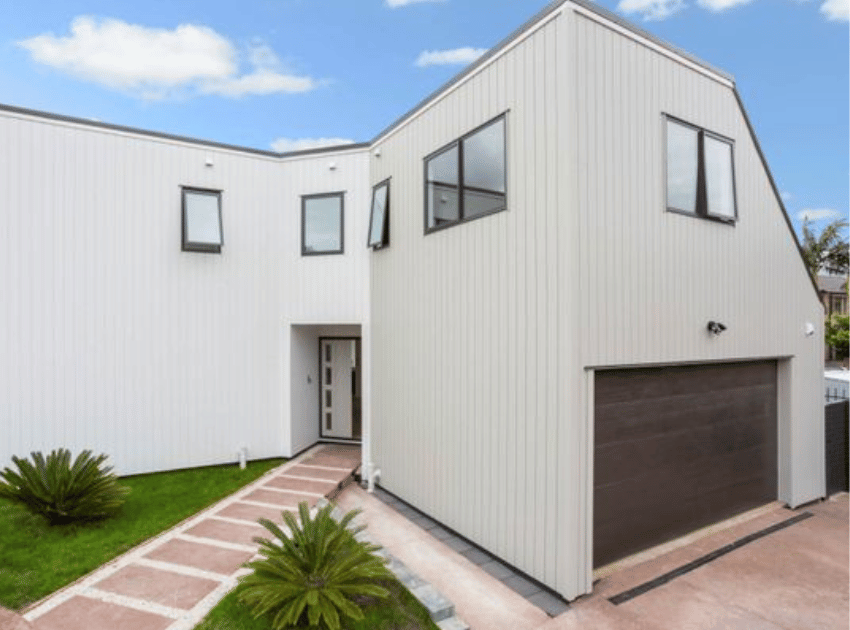
What weathertightness really means
Weathertightness is the building’s ability to keep water out and let any incidental moisture drain and dry. It depends on the whole envelope working as a system — cladding, drainage cavity, building wrap, flashings around windows and penetrations, roof junctions and ground clearances. Fail any one element and water finds its way in, often invisibly, until the framing rots.
Warning signs to check
- Staining, swelling or soft spots around windows and doors
- Cracked plaster cladding, especially at junctions and penetrations
- Musty smells, internal damp patches or peeling paint
- Inadequate ground clearance or decks butting hard against cladding
- Missing or poorly formed flashings
- A monolithic plaster home from the leaky-building era (mid-1990s to mid-2000s)
The weathertight system
- Cladding — the visible defence; modern fibre-cement, weatherboard or cavity systems.
- Drainage cavity — the gap behind cladding that lets water drain and the wall dry. The single biggest advance over leaky-era construction.
- Building wrap & flashings — the second line of defence and the detailing around every opening.
- Junctions & penetrations — windows, decks, roof-to-wall, pipes — where most failures actually start.
- Ground clearances & drainage — keeping water away from the base of the wall.
Why Auckland is harder than most
Driving coastal rain, salt-laden wind and high humidity put more load on the envelope — and leave less margin for a poor detail. Auckland weathertightness work needs Auckland-specific material choices and detailing, not generic specs.
Buying or owning a plaster home?
Get the reclad number before you commit — $99 incl GST, credited if you build.
A 12-page Recladding Cost Plan built from your council property file and inspection reports: the number, the range either side of it, and the one survey worth paying for before you go unconditional. Five working days, no site visit needed.
Order a Recladding Cost Plan →Plaster and leaky-era homes
Monolithic plaster homes from the leaky-building era are the highest-risk category — but not all are failing. The right move depends on the home: some need a full reclad, some targeted repair, some are sound. The key is an honest assessment before you buy or renovate, not a blanket assumption.
How a weathertight renovation works
A proper weathertight renovation starts with diagnosis — often invasive moisture testing — then a system selection and engineering, full consent (recladding needs building consent), and a build that opens up, repairs any rotten framing, and reinstates the envelope as a complete drained-cavity system. Combining it with an extension or interior renovation while the home is opened up is often the most cost-efficient path.
Weathertightness FAQs
Weathertightness is the building envelope’s ability to keep water out and let any incidental moisture drain and dry. It depends on cladding, the drainage cavity, building wrap, flashings, junctions and ground clearances all working together as a system — not just the cladding surface.
Staining or swelling around windows, cracked plaster cladding at junctions, musty smells and internal damp, peeling paint, inadequate ground clearance, and missing or poor flashings. Monolithic plaster homes from the mid-1990s to mid-2000s are the highest-risk category.
No. Some leaky-era plaster homes need a full reclad, some need targeted repair, and some are sound. The right answer depends on an honest assessment of that specific home — ideally with moisture testing — rather than a blanket assumption.
Driving coastal rain, salt-laden wind and high humidity put more load on the building envelope and leave less margin for a poor detail. Auckland weathertight work needs region-specific material choices and detailing rather than generic specifications.
Yes — recladding and weathertight remediation are restricted building work and require building consent. The work must be carried out or supervised by a Licensed Building Practitioner, and the cladding system is typically selected with engineering input.
Often yes, and it’s usually the most cost-efficient path. While the home is opened up for recladding, combining it with an extension or interior renovation shares scaffold, design and management costs rather than paying them twice.
Worried about weathertightness?
Get an assessment, book a free consultation, or grab the homeowner’s guide.
Get an instant estimate → Book a free consultation → Download the 7 Things ebook →