New Zealand · 2026 Edition
Home Extension Costs NZ 2026: Real Prices by Extension Type

Home extensions in NZ in 2026 cost between $30,000 for a deck addition and $450,000+ for a full second-storey extension. Most ground-floor extensions sit at $4,500 – $8,000 per square metre built. The variables that drive the spread: extension type, structural complexity, site challenges, and finish level.
This guide breaks down 2026 home extension costs by every common extension type — with real cost ranges, the hidden costs most homeowners miss, and four named AVR case studies showing exactly where the money goes.
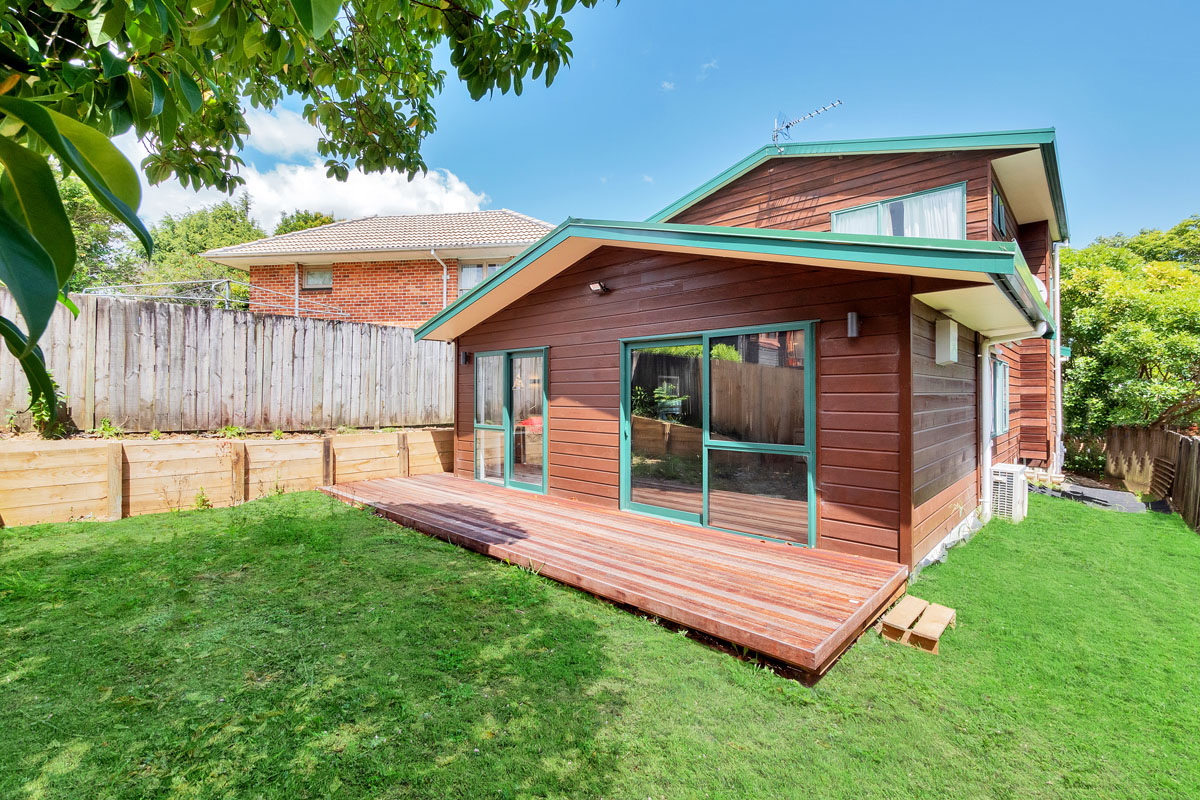
Home extension costs NZ 2026 — by extension type
| Extension type | Typical size | 2026 cost range | Cost per m² |
|---|---|---|---|
| Deck or patio addition | 20 – 50m² | $25K – $90K | $1,200 – $1,800 |
| Basic bedroom add | 10 – 20m² | $55K – $90K | $2,750 – $5,500 |
| Bathroom extension | 5 – 15m² | $35K – $110K | $5,000 – $8,500 |
| Garage extension or conversion | 20 – 40m² | $35K – $120K | $1,800 – $3,500 |
| Kitchen extension | 10 – 30m² | $55K – $170K | $4,500 – $6,500 |
| Ground-floor extension (single room) | 20 – 40m² | $110K – $260K | $4,500 – $6,500 |
| Multi-room ground-floor extension | 30 – 60m² | $130K – $280K | $4,500 – $5,500 |
| Master suite extension | 30 – 50m² | $180K – $350K | $5,000 – $6,500 |
| Second-storey extension | 50 – 100m² | $220K – $550K+ | $5,500 – $8,000 |
| Conservatory or sunroom | 15 – 30m² | $45K – $130K | $3,500 – $4,500 |
These are 2026 NZ market ranges. Auckland sits at the upper end of each range — 10–20% above other NZ regions due to labour and supply costs. Premium suburbs (Remuera, Devonport, Ponsonby) add another 10–15%.
What drives the price of a home extension
Three factors account for 80% of the variance between a $130K and a $280K ground-floor extension of the same size:
1. Structural complexity
| Scenario | Cost impact |
|---|---|
| Level site, simple slab, conventional roof | Baseline (bottom of range) |
| Sloping site requiring engineered piles | +$15K – $40K |
| Second-storey addition (existing structure reinforcement) | +$25K – $80K |
| Connecting to existing roofline (complex flashing, structural) | +$8K – $20K |
| Foundation work for difficult ground conditions | +$10K – $35K |
2. Finish level
| Spec tier | Cost per m² of finished space |
|---|---|
| Standard (Hardiplank, vinyl, basic fixtures) | $4,500 – $5,500/m² |
| Mid-range (cedar, engineered timber, mid-spec joinery) | $5,500 – $6,500/m² |
| High-end (architectural finishes, premium materials, custom joinery) | $6,500 – $9,000+/m² |
3. Plumbing & electrical complexity
An extension with a kitchen, bathroom, and ensuite needs significantly more plumbing rough-in than a single-bedroom add. Each wet room added typically costs $25K – $45K beyond the basic per-m² rate. New electrical circuits, switchboard upgrades, and smart home wiring add $8K – $20K depending on scope.
Hidden costs that catch homeowners out
Beyond the per-square-metre construction price, four cost categories regularly blow extension budgets:
Council fees and consents
| Consent type | Cost | Timeline |
|---|---|---|
| Building consent (most extensions) | $3,000 – $8,000 | 20–40 working days |
| Resource consent (if planning rules breached) | $3,000 – $10,000+ | 20–60 working days |
| Development contributions | $0 – $25,000+ | Variable |
| Engineer’s report | $2,000 – $5,000 | 2–4 weeks |
Specialist professional fees
- Architectural design: 8–15% of build cost
- Project management: 10–15% (included in fixed-price design-and-build contracts)
- Quantity surveyor: 1–3% of project cost
- Interior design: 5–10% of finishings budget if engaged
Scope creep (“upgrade creep”)
The most common budget killer. While the extension is being built, homeowners decide to “while we’re at it” upgrade the existing kitchen, refresh other rooms, or add features that weren’t in the original brief. Each addition typically costs 10–30% more than it would have done as part of the original scope, because the trades are already paid for the day they’re on site.
Unforeseen site conditions
Common surprises in older NZ homes: rotten timber framing exposed during demolition, undersized waste pipes that need replacing, asbestos in old vinyl or fibrolite, outdated wiring needing rewire. Build a 15–20% contingency into your budget. For pre-1970 character homes, budget 25–30% contingency.
Real AVR extension projects + actual costs
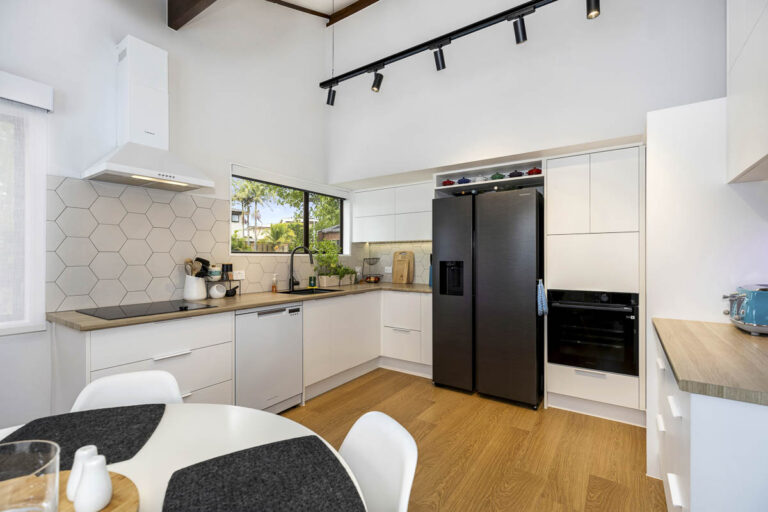
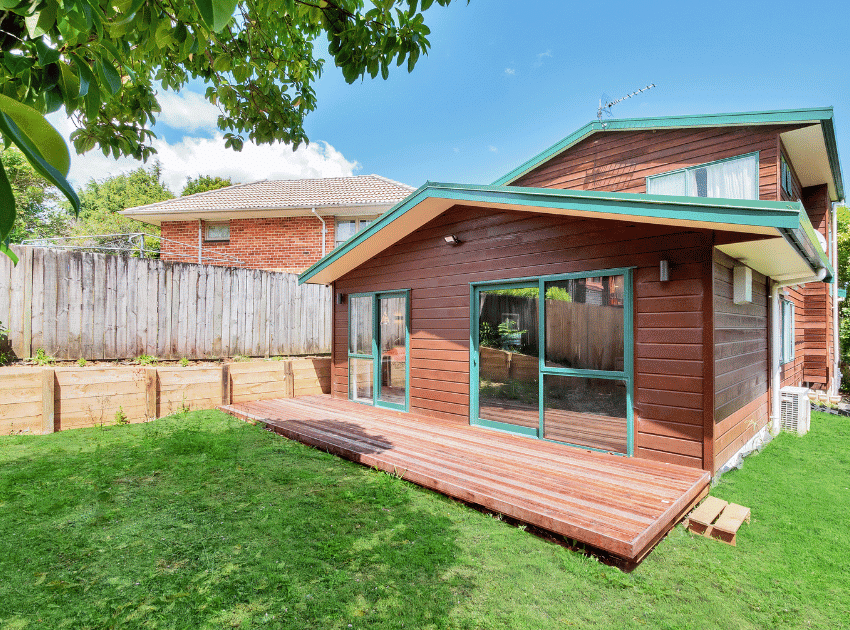
Onehunga ground-floor extension — retirement-ready
Ground-floor extension delivering a new master suite (bedroom + ensuite + walk-in wardrobe) plus a full kitchen rebuild. ~50m² of new build integrated seamlessly with the existing home.
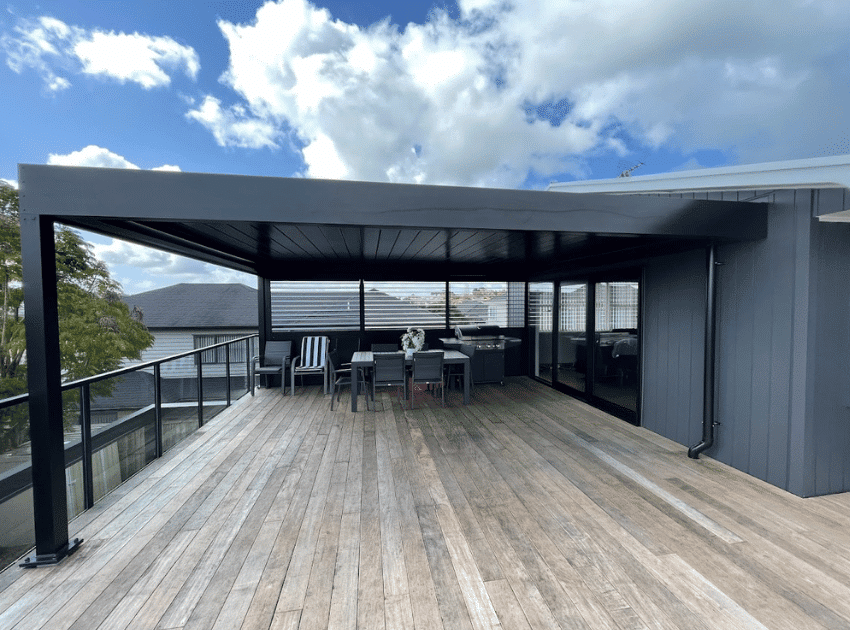
Mt Roskill second-storey extension — doubling the floor area
Full upper-level living space with Louvretec opening roof for year-round outdoor entertaining. Doubled the home’s floor area while keeping the footprint untouched. ~65m² added.
Epsom reclad + second-storey — when selling isn’t an option
Reclad + extension combined in one continuous build — solving the weathertightness problem and adding bedroom + ensuite. Combining the two projects saved roughly $80K–$120K vs. doing them separately (scaffold, design, and project management paid once).
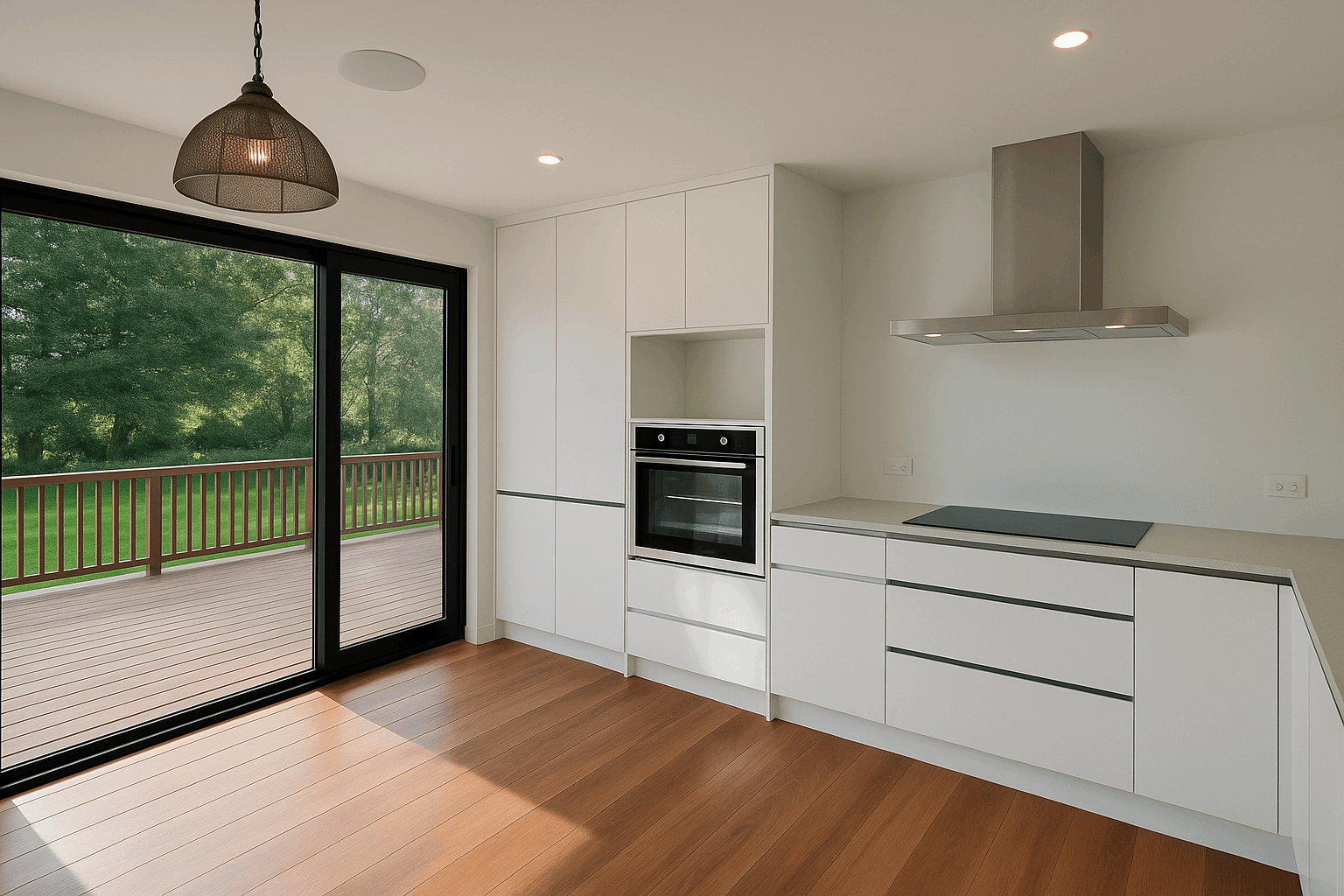
Northcote conservatory conversion + extension — modernising a 1959 home
Northcote home largely unchanged since 1959. AVR opened up the living area, added a separate master bedroom with ensuite, converted the existing sunroom into living space, added an entertainment area and spare bedroom, plus a new kitchen and bathroom overlooking the bush reserve. Fixed-price contract from the start.
How to save without compromising quality
Strategic savings opportunities
| Strategy | Potential saving | Trade-off |
|---|---|---|
| Off-season build (winter) | 5–15% | Some weather delay risk |
| Combine with reclad or major reno | 10–20% on combined cost | Need bigger budget upfront |
| Prefab or modular elements | 10–20% | Design constraints, may look modular |
| Recycled materials (doors, fixtures) | 30–50% on applicable items | Time to source, condition variable |
| Stage the project (build, finish later) | Spread cost over years | Adds 10–15% total cost |
| Standard kitchen + custom feature elements | 20–40% on kitchen | Some visual compromise |
Where NOT to economise
Don’t cut on these — they cost more to fix than to do right
- Waterproofing in wet areas — failure costs $15K–$40K to remediate
- Structural engineering — beams undersized today are unfixable without major rework
- Cabinetry hardware — Blum or Hettich runners outlast the kitchen; cheap runners fail in 3–5 years
- Insulation while walls are open — adding it later costs 3–5× more
- Cladding system on a Plaster-era home — wrong system locks in future weathertightness risk
Financing your home extension
Most NZ families finance extensions through one of four routes:
| Option | Typical interest (2026) | Best for |
|---|---|---|
| Mortgage top-up | 6.5 – 7.5% | Most cost-effective; works if you have equity |
| Construction loan | 7.5 – 9% | Staged drawdowns for larger projects ($300K+) |
| Revolving credit facility | 7.5 – 8.5% | Flexibility, only pay interest on amount drawn |
| Personal loan | 8.5 – 15% | Smaller extensions ($30K–$80K); when home equity isn’t accessible |
Banks typically lend up to 80% LVR (loan-to-value ratio) on the post-renovation value, which lets you borrow against the value the extension creates — not just the current value. A QS-backed fixed-price contract makes the bank approval significantly faster.
Home extension cost FAQs
NZ home extensions in 2026 typically cost $4,500 – $8,000 per square metre. A small bedroom add (15m²) runs $55K–$90K. A multi-room ground-floor extension (50m²) runs $130K–$280K. A second-storey extension (70m²) runs $220K–$450K+. Auckland sits at the upper end of these ranges; other NZ regions sit 10–20% lower.
Decks and patios are the cheapest extensions ($1,200–$1,800/m²) because there’s no full enclosure. Garage conversions to living space are the cheapest enclosed extension ($1,800–$3,500/m²) because the structure exists. Single-room ground-floor extensions start around $4,500/m² built. Anything quoted below those rates is either incomplete scope or a quote that will balloon mid-build.
Three reasons. Structural reinforcement — the existing house wasn’t designed to carry the upper level. Temporary roof removal — the existing roof is taken off and the family usually has to move out for 3–6 months. Complex consenting — height-to-boundary rules, neighbour notification, and visual impact assessments are more involved. Expect to pay 20–40% more per m² than a ground-floor extension.
Almost all structural extensions need building consent under the Building Act. Exceptions: small decks under 1.5m off the ground (Schedule 1 exempt), some accessory buildings under 30m², and detached granny flats up to 70m² under the Building & Construction (Small Stand-alone Dwellings) Amendment Act 2025, effective 15 January 2026 — provided the design is simple, work is supervised by an LBP, and the council is notified via Form 2AA. Most extensions also need to comply with planning rules under the Auckland Unitary Plan, which may trigger resource consent. See our Auckland Council consent guide.
For modern homes (post-2000): 10–15%. For 1970–2000s homes: 15–20%. For pre-1970 character homes: 20–30%. The contingency covers what’s behind walls that no one can see until demolition starts — rotten framing, old wiring, undersized pipes, asbestos. Pretending the contingency doesn’t exist is the #1 cause of NZ extension budget blow-outs.
Depends on scope. Ground-floor rear extensions usually allow occupied builds with some inconvenience. Second-storey extensions and major structural work typically require the family to relocate for 3–6 months because the existing roof is temporarily removed. Most clients with major extensions arrange a short-term rental nearby or stay with family during the disruptive phase. Budget $600–$1,200/week for Auckland rental during that period.
Plan on 6–12 months from kick-off to handover. The breakdown: 4–8 weeks design and consent drawings, 6–10 weeks council consent processing, 12–28 weeks construction depending on size, plus 2–4 weeks for Code Compliance Certificate. Second-storey extensions and multi-room builds sit at the longer end.
A well-executed $200K extension typically adds $150K–$300K of market value in established Auckland suburbs. The ratio is best for adding bedrooms and living space, worst for adding more bathrooms. The biggest driver of return is suburb — extensions in school-zone suburbs (Grammar, Epsom, Remuera) consistently outperform lower-value areas. Over-spec’ing for the suburb’s ceiling value is the most common ROI mistake.
Ready to plan your home extension?
Get a 2-minute estimate, a free 30-minute consultation, or the 7 Things ebook — whatever stage you’re at.
Get an instant estimate → Book a free consultation → Download the 7 Things ebook →