Auckland · 2026 Edition
Design-and-Build vs Separate Architect and Builder: Which is Right for You?

When you start planning a major renovation in Auckland, one of the first decisions you will make — often without realising it — is whether to use a design-and-build company or the traditional separate approach: hire an architect to design it, then get builders to price and build it.
- What Design-and-Build Actually Means
- What the Separate Approach Looks Like
- The Hidden Costs of the Separate Model
- Where the Separate Model Works Well
- Timeline Comparison
- Single Point of Accountability
- What to Ask a Design-and-Build Company Before You Sign
- How Add Value Renovations Approaches Design-and-Build
- Take the full 25-question checklist to every builder meeting
What Design-and-Build Actually Means
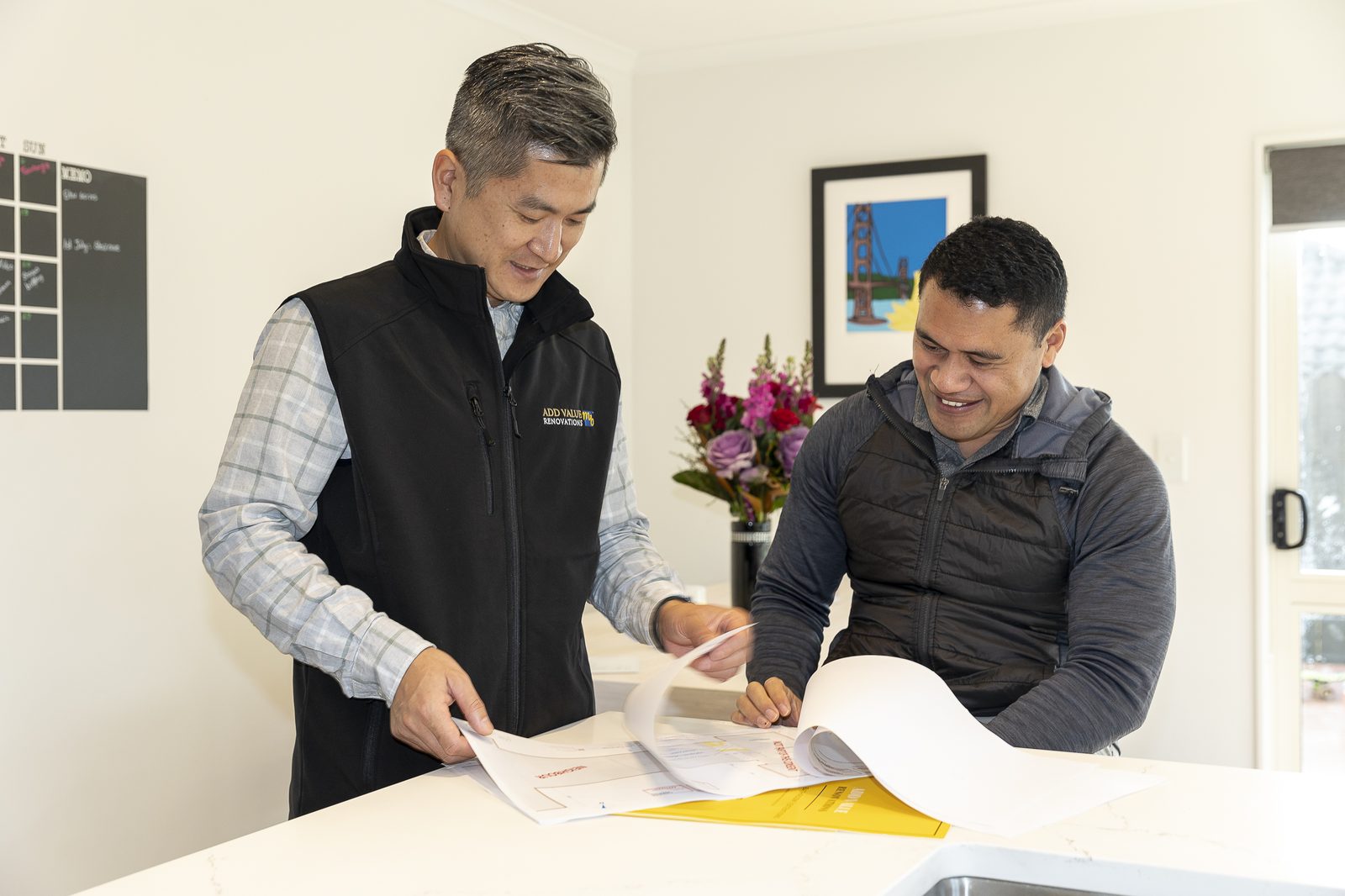
In a design-and-build contract, one company is responsible for both the design and the construction. You sign one contract, deal with one company, and have one point of accountability from first sketch to final inspection.
The design team and the build team work in the same organisation — which means the design is developed with buildability and cost in mind from the start. A design-and-build company will tell you during the design phase if something will be expensive to build, and will suggest alternatives. An architect working independently of a builder has no financial incentive to do the same.
What the Separate Approach Looks Like
In the traditional model, you hire an architect (or architectural designer) to produce a full set of drawings. Once the drawings are complete, you take them to the market and get 2–3 builders to price them. You then select a builder and sign a separate construction contract.
On paper, this sounds like it gives you more control and more competitive pricing. In practice, it creates a structural gap between the person who designs the project and the person who builds it — and that gap is where most problems originate.
The Hidden Costs of the Separate Model
The headline cost of hiring a separate architect looks appealing — architectural fees typically run 8–15% of the build cost. But there are costs in the separate model that do not appear in that percentage:
- Design iterations: If the first design comes in over budget when builders price it, the architect charges to redesign it. Multiple rounds of pricing and redesign are common — and each round costs you money and time.
- Builder pricing variations: When three builders price the same drawings, their interpretation of what is included varies. The lowest quote often excludes items the other two included — you only find out when variations start arriving.
- Coordination costs: On site, if there is a conflict between what the drawings show and what the builder has priced, you are in the middle trying to resolve it. Both parties have contractual protection. You do not.
- Consent amendments: If the builder finds a problem with the consented design once work starts, the architect charges to amend the drawings and the council charges to process the amendment.
We regularly speak to Auckland clients who started with the separate model and came to us midway through — the design cost them $45,000, no builder would price it within their budget, and they had lost 8 months.
Where the Separate Model Works Well
The traditional model is genuinely better in some situations:
- New builds over $2M where the scale and complexity warrant a full architectural team with a dedicated project architect
- Heritage or character projects requiring a specialist architect with specific experience in that building type
- Highly experimental or award-seeking design where design innovation is the primary goal, not cost efficiency
- Projects where the client wants full design control and is experienced enough to manage the coordination themselves
For most Auckland renovations — kitchens, bathrooms, extensions, full home renovations up to $1.5M — the design-and-build model delivers better outcomes at lower total cost.
Timeline Comparison
Design-and-build is consistently faster from brief to consent:
Single Point of Accountability
The most underrated advantage of design-and-build is accountability. When something goes wrong in the separate model — and something always does — you have two parties pointing at each other. The architect says the builder misread the drawings. The builder says the drawings were ambiguous. You are stuck in the middle, potentially paying legal fees to resolve it.
In a design-and-build contract, there is one company responsible for both the design and the build. If a design decision leads to a build problem, the same company resolves it at their own cost. You do not arbitrate between two separate contracts.
What to Ask a Design-and-Build Company Before You Sign
Not all design-and-build companies are equal. The model only works if the design team and build team are genuinely integrated — not if a builder has simply hired a drafter to produce plans they then price separately.
Ask these questions:
- Do your designers and project managers work together from the start, or does design hand over to build at consent?
- How do you manage cost if the design evolves during the build phase?
- Can I speak to a client who went through the full design-and-build process with you?
- Is the design fee fixed, or does it escalate with revisions?
- Are you a registered Master Builder?
How Add Value Renovations Approaches Design-and-Build
At Add Value Renovations, our designers, project managers and build teams work together from your first consultation. We do not hand your project from a design team to a build team — the same people who help you design your renovation manage it through to completion.
We provide a fixed price once design is agreed, and we manage building consent as part of the service. Variations are quoted in writing and require your sign-off before work proceeds. Every contract of $30,000 or more is covered by the Master Build 10-Year Guarantee.
If you are weighing up the design-and-build model against the traditional approach, talk to us. We will give you an honest assessment of which model suits your project — even if that means recommending a specialist architect for your situation.
Take the full 25-question checklist to every builder meeting
We’ve put 13 more questions, what to listen for in each answer, the red flags to watch for, and a one-page summary you can print and take to every builder meeting — into a free PDF. No payment, no obligation.
Design-and-build your Auckland renovation
Three ways to move forward — an instant estimate, a free on-site consultation, or our renovation ebook.
Get an instant estimate → Book a free consultation → Download the 7 Things ebook →