Auckland · 2026 Edition
How to Create Seamless Indoor-Outdoor Flow in Your Auckland Home

Indoor-outdoor flow is the single highest-impact lifestyle upgrade in an Auckland renovation — and in our climate it pays back in both daily living and resale value. Done properly, it dissolves the line between kitchen, living and deck so the whole space lives as one.
Good flow isn’t just big doors. It’s level thresholds, aligned floor levels, the right glazing for the aspect, shelter from Auckland’s wind, and a deck or loggia sized to actually be used. This guide covers how to design it well — and the details that make or break it.
It’s drawn from the rear extensions and full-home renovations we deliver across Auckland.
Why it matters in Auckland
Auckland’s mild climate makes indoor-outdoor living usable for much of the year — which is exactly why buyers and families prize it. A kitchen and living space that open onto a sheltered deck feels twice the size and transforms how the home is used for everyday meals and entertaining. It’s consistently one of the strongest lifestyle-and-value plays in an Auckland renovation.
The elements of great flow
- Level thresholds. The floor inside and the deck outside should sit at the same level, with a flush or near-flush threshold. A step down kills the “one room” feeling instantly.
- Wide, well-chosen glazing. The opening should frame the outdoor space and pull light deep into the room.
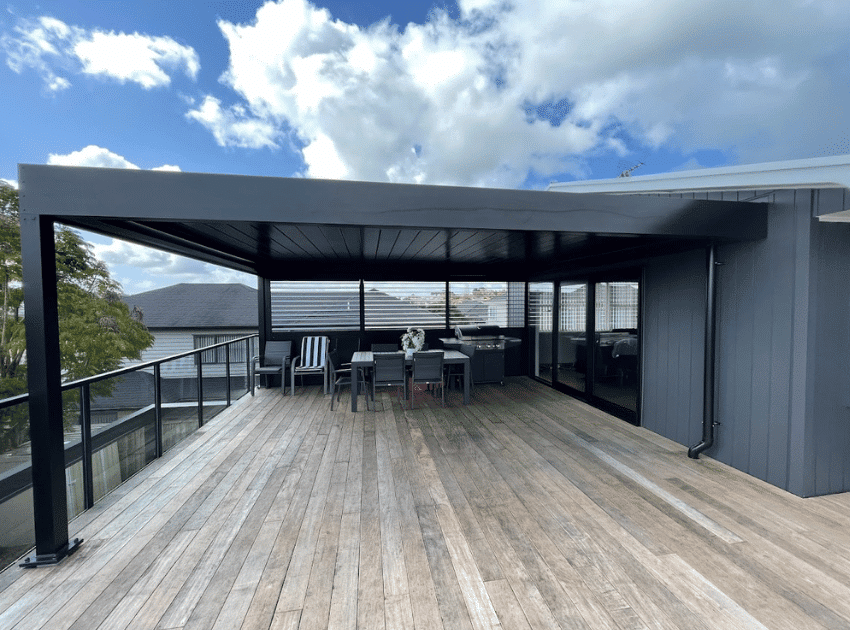
- Shelter. Auckland wind and sun matter. A loggia, pergola, louvre roof or recessed deck makes the outdoor space usable far more of the year.
- A deck sized to be lived on. Big enough for a table and seating, oriented to the sun, with a practical surface.
- Material continuity. Carrying flooring tone, ceiling line or cladding outward visually extends the room.
Bifolds vs sliders vs stackers
| Option | Best for | Trade-off |
|---|---|---|
| Bifold doors | Opening the whole wall right up for entertaining | Stacked panels take up reveal space; more frames when closed |
| Sliding doors | Big uninterrupted glass and views when closed | Only ever half-open at once |
| Stacker sliders | A wider clear opening than standard sliders | Cost sits between sliders and bifolds |
There’s no single right answer — it depends on whether you value the open-wall moment (bifolds) or the view-when-closed and easy daily use (sliders).
The details most people miss
- Drainage at the threshold. A flush threshold needs a proper drainage channel so driving rain doesn’t track inside. This is a weathertightness detail — get it engineered.
- Sun and wind orientation. A north-facing deck with western wind shelter is the Auckland sweet spot.
- Ceiling line. Carrying the interior ceiling height out over the deck makes the connection feel deliberate, not tacked-on.
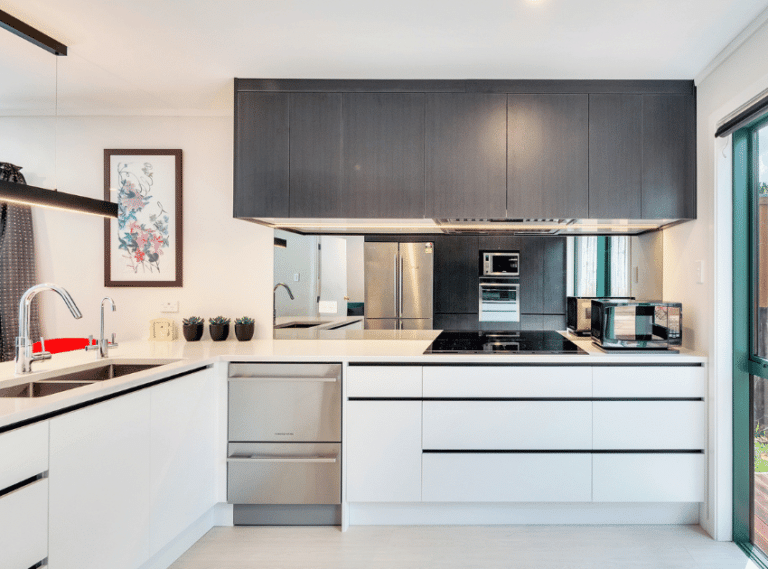
- Sightlines from the kitchen. Position the kitchen so whoever’s cooking still faces the outdoor space and the people in it.
What it adds in value
Indoor-outdoor extensions are among the best-returning renovation moves in Auckland — a kitchen-led ground-floor extension with proper flow onto a deck commonly returns 80–120% of cost in established suburbs, and shows exceptionally well at resale. The lifestyle gain is immediate; the value gain follows.
Indoor-outdoor flow FAQs
It’s designing the connection between internal living spaces and an outdoor area — usually a deck or loggia — so they read and function as one continuous space. The keys are level thresholds, generous glazing, shelter from wind and sun, and a usable, well-oriented outdoor room.
Bifolds open the whole wall right up, which is ideal for entertaining; sliders give a bigger uninterrupted view when closed and are easier for everyday use. Stacker sliders sit in between. The right choice depends on whether you value the open-wall moment or the view and daily convenience.
Altering the building envelope to install large doors is restricted building work and generally needs building consent. Decks under 1.5m off the ground are often exempt under Schedule 1, but the door opening and any structural change usually aren’t. Confirm before you start.
A flush, level threshold needs a properly engineered drainage channel and weathertight detailing so wind-driven rain drains away rather than tracking inside. This is a critical detail — it should be designed and built by people who understand NZ weathertightness.
Yes. It’s one of the highest-return lifestyle upgrades in Auckland’s climate. A kitchen-led extension with good flow onto a deck commonly returns 80–120% of its cost in established suburbs and is a strong selling point at resale.
Want to open your home to the outdoors?
Get a realistic Auckland cost range, book a free consultation, or grab the homeowner’s guide.
Get an instant estimate → Book a free consultation → Download the 7 Things ebook →